Autumn hair loss: when it's normal and what you can do
A Mi Momento guide
Guide No. 10
September arrives and the hairbrush wakes up fuller. Before you panic: seasonal shedding is real, it's normal and it passes. What you can do is make things easy for the hair that's coming next.
Why more hair falls out in autumn
Hair lives in cycles: it's born, grows, rests and lets go. In autumn, many hairs that had spent months in the resting phase let go all at once — a seasonal inheritance we share with half the animal kingdom. Add to that the sun, the sea and the tight ponytails of summer, which catch up with you right around now.
The good news: seasonal shedding is temporary. It lasts a few weeks, the hair that falls was already “retired”, and new hair follows behind. The question is making sure that new hair is born from a scalp in good shape.
When to worry (and when not to)
Don't worry if: the shedding arrives with the change of season, it's diffuse — more volume in the brush, not bald patches — and it eases off within a few weeks. Do worry (and see a doctor) if: there are bare patches, intense itching or pain, or the shedding drags on for months. Hair loss of medical or hormonal origin is treated at the doctor's, not in the chair — and we'll say so with that same clarity.
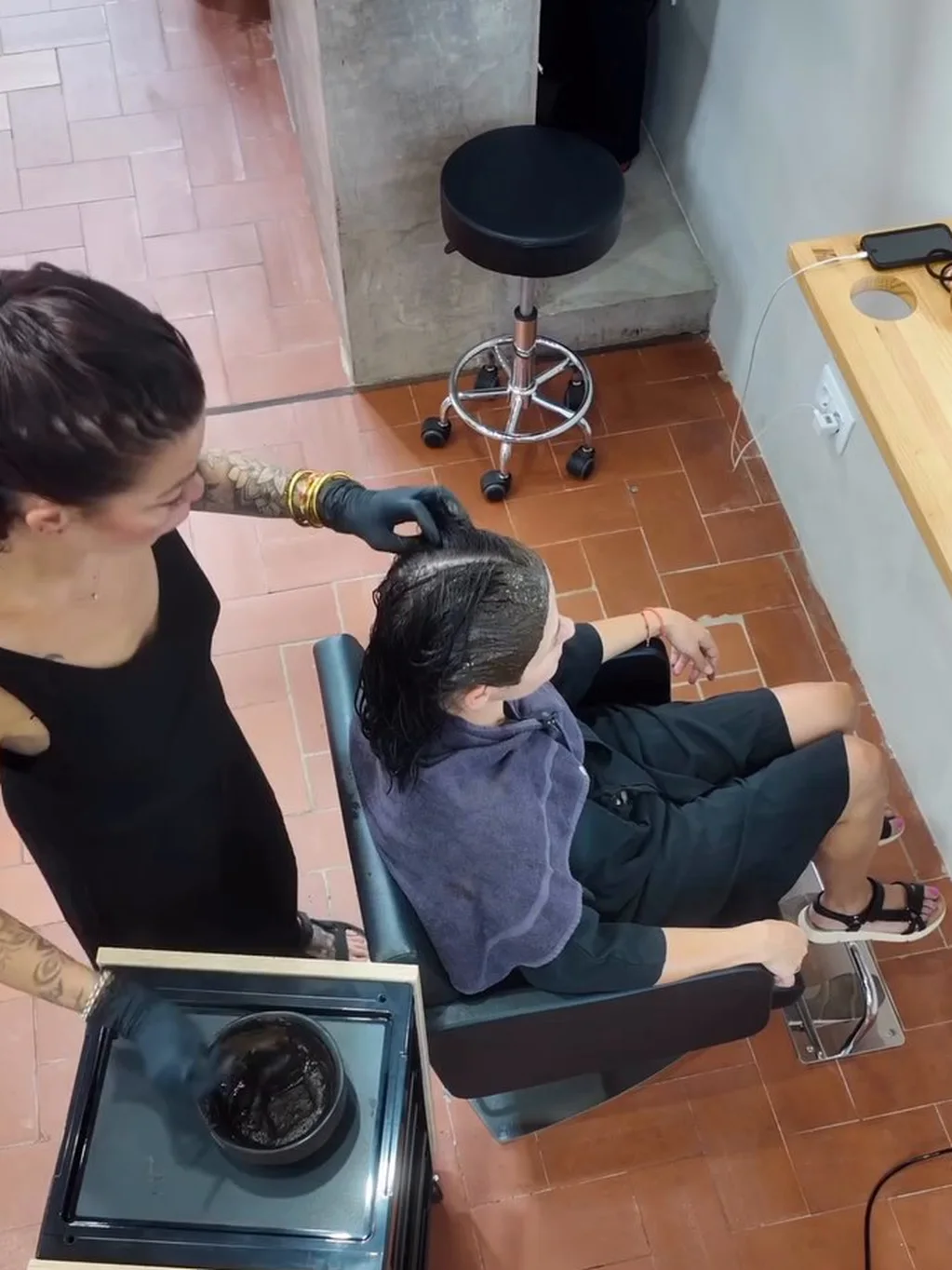
Heavy shedding after giving birth is also normal: hair muds, in fact, are the usual way our clients keep colouring their hair while looking after that stage.
Want to try it on your hair?
What we work on at the salon
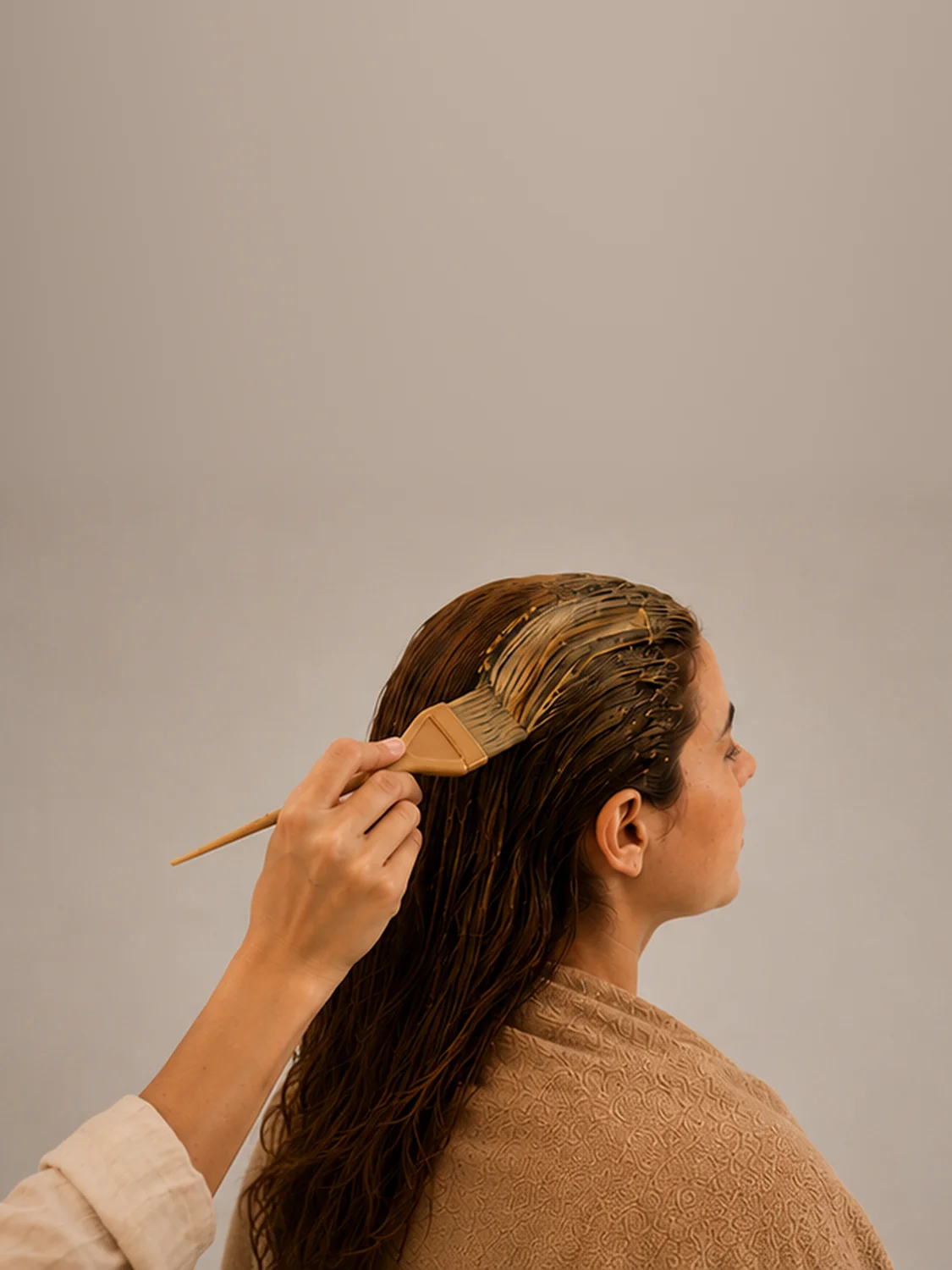
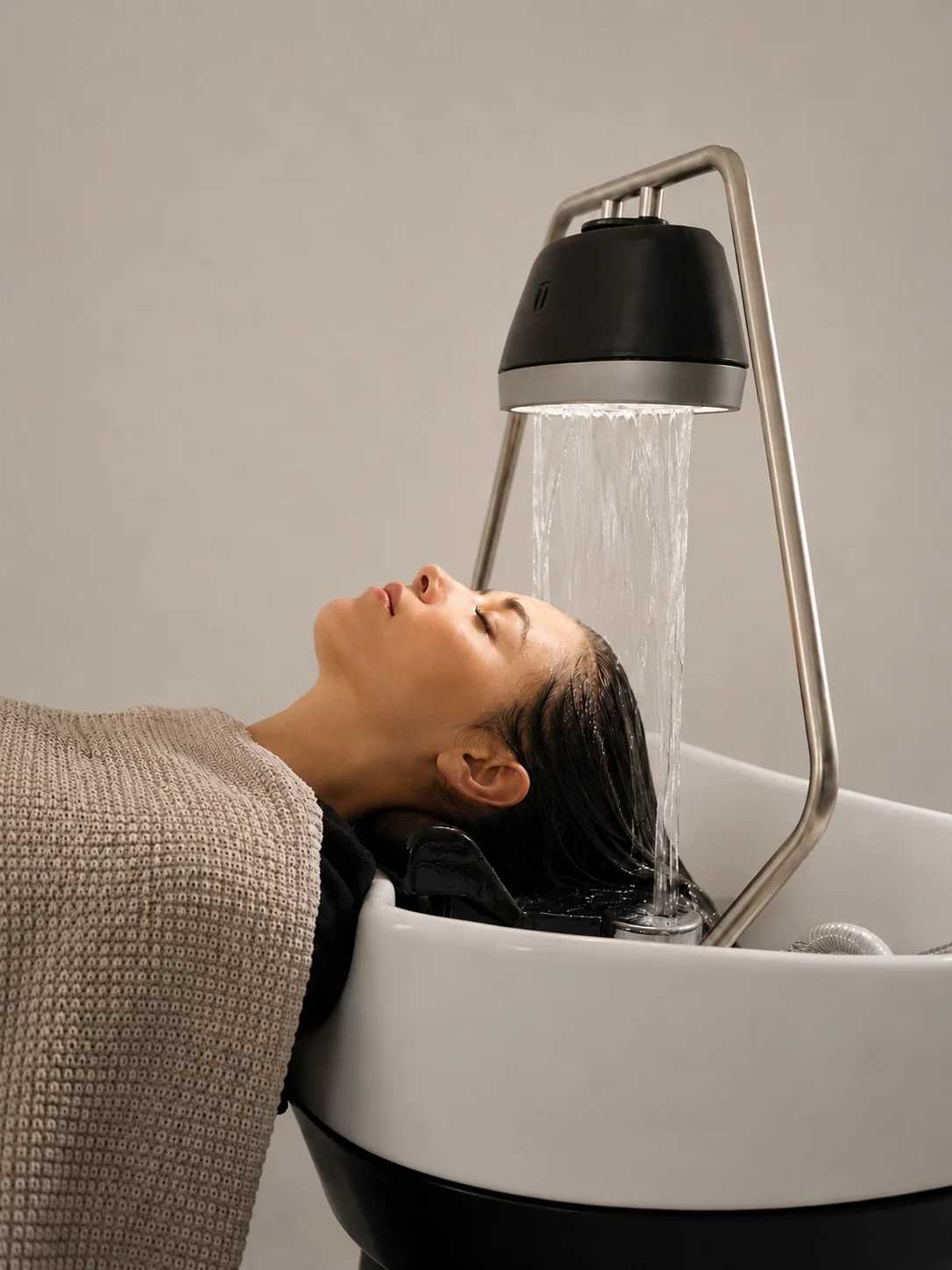
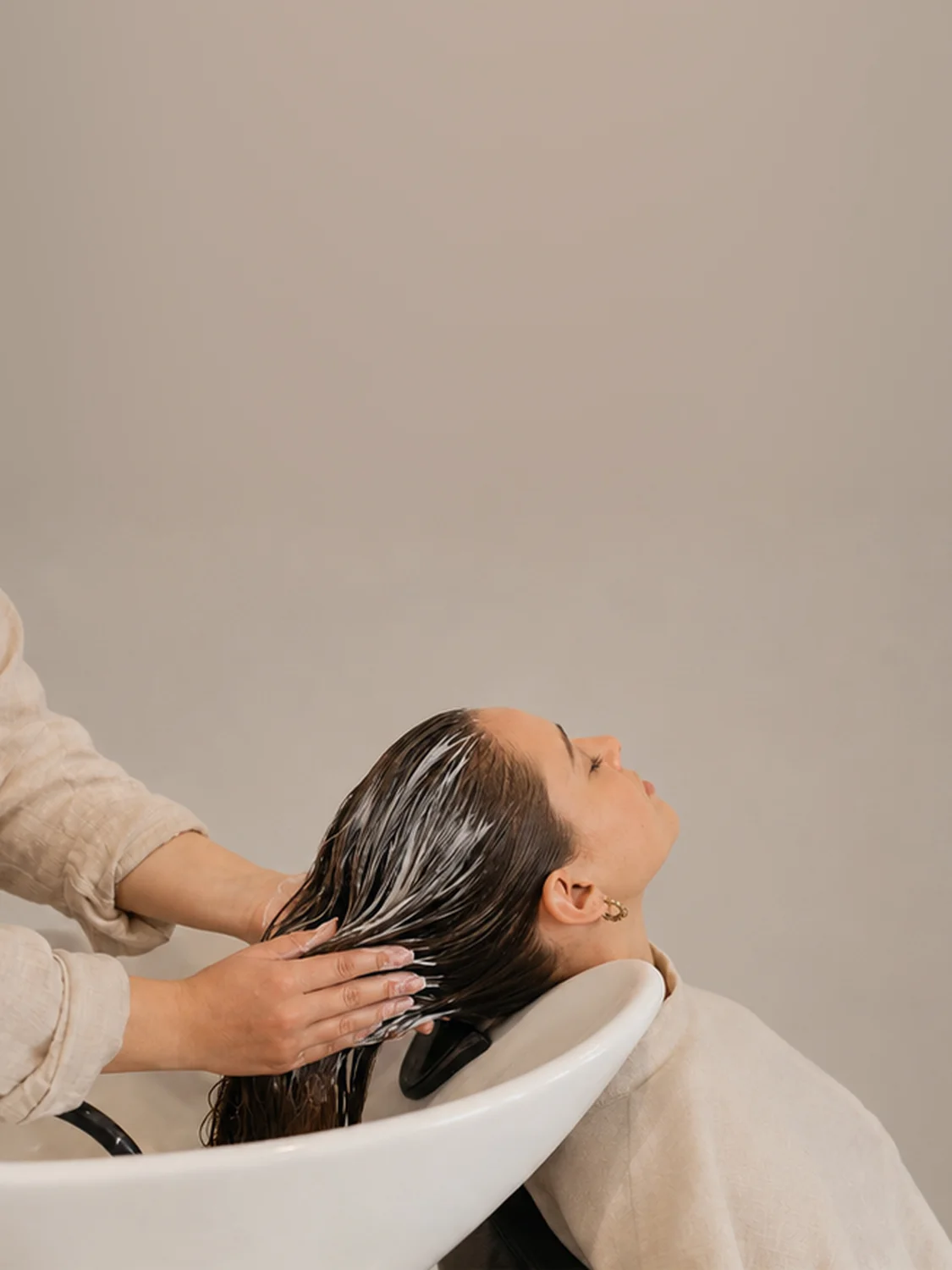
Three fronts. Scalp oxygenation, which resets follicles blocked by silicones and leaves the skin ready to work. Massage and microcirculation — the basis of the Hair Spa —, because a well-irrigated follicle is a follicle that produces. And plants: Lawsonia adds protein and helps stabilise shedding from the first application.
No miracle products: well cared-for ground and consistency. At the micro-camera diagnosis we see how your scalp is doing and put together the plan that suits your particular autumn.
And at home, make it easy
Wash gently and without harsh sulphates, avoid very tight ponytails at this time of year, and give your scalp a couple of minutes of massage when you wash — microcirculation gets going with your fingers too.
If this autumn your hairbrush is giving you a fright, come and let us take a close look. We will be waiting for you at Mi Momento, at Carrer de Verdi 49, in Gràcia.
Frequently asked questions
How long does autumn seasonal shedding last?
A few weeks — usually between one and two months. It's diffuse, doesn't leave bare patches and eases off on its own. If it drags on longer or you see gaps, the visit is to the doctor, and we'll say so just as clearly at the diagnosis.
Is postpartum shedding like the autumn kind?
It is similar: also diffuse, temporary and hormonal in origin, though usually more intense. It is a stage we accompany a lot at the salon — hair muds, in fact, are how our clients usually keep their colour while caring for the scalp through those months.
Is it true that hair muds help stabilise shedding?
Yes: on top of colour, muds are treatment. Lawsonia adds protein and helps stabilise shedding from the first application, which is why they're also the usual choice for our clients after giving birth.