Hair muds: a first guide
A Mi Momento guide
Guide No. 1
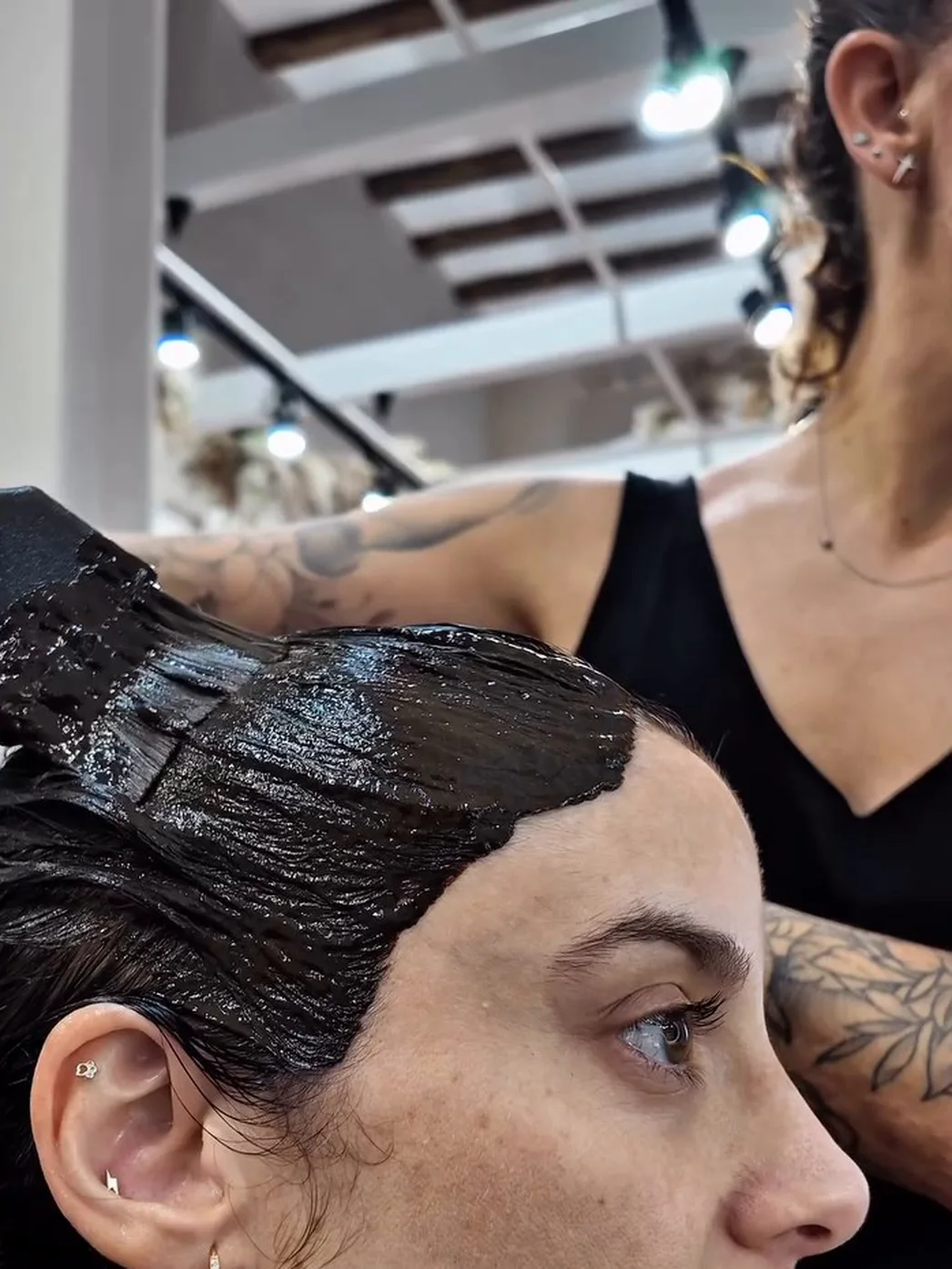
Ground tinctorial plants mixed with hot water. That is it. No ammonia, no PPD: the colour comes from the plant itself. This is the ritual our salon is built on — told the way we would tell you in the chair.
What they actually are
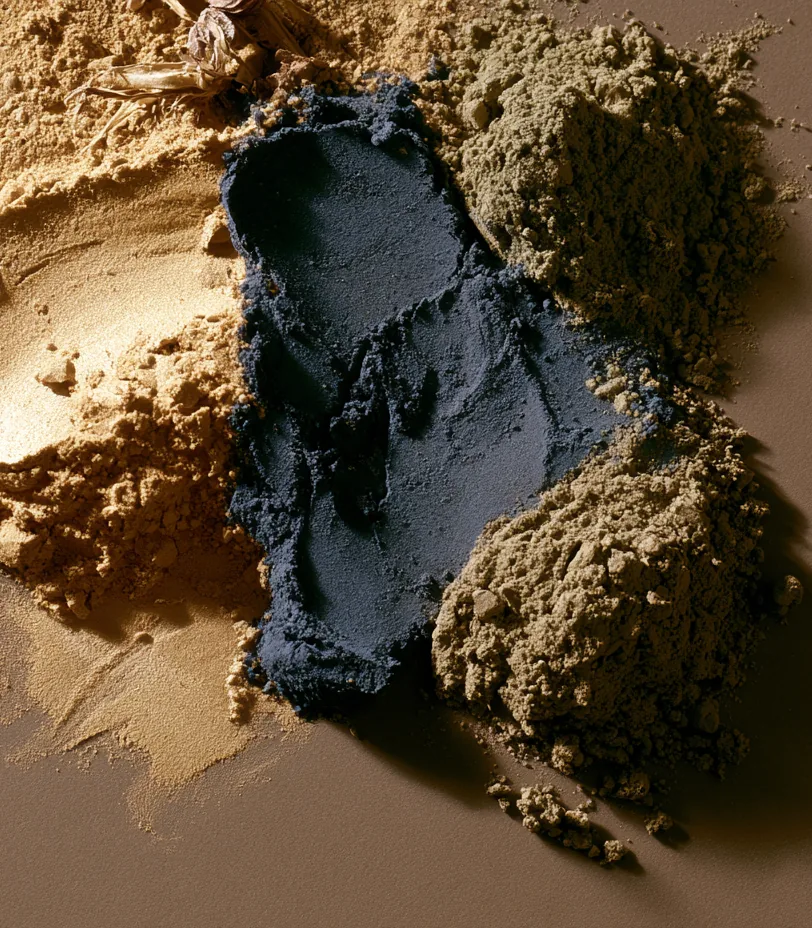
Hair muds are ground tinctorial plants — Lawsonia, the queen of them all; Cassia, Indigo, walnut — mixed with hot water. No ammonia, no PPD, no resorcinol: the colour comes from the plant itself, which is why real muds smell of herbs, not of dye.
They are living materials: each plant changes with the season and each head of hair responds in its own way. That is why there are no recipes here — your blend is prepared for you after a micro-camera diagnosis of your scalp, with a closed quote before we start.
Greys are not covered: they are glazed
It is the first thing we explain to anyone coming from dye: a mud does not have the power to cover a grey the way chemistry does. What it does is wrap itself around the hair and glaze it — the grey becomes a reflection of light within your colour, a soft highlight effect that looks remarkably natural.
To explain it we use the vase we keep in the salon: the mud adds itself to what is already there. It does not erase your base, it dresses it. That is why there is no harsh root line as it grows, and why the colour ages beautifully: with no oxidation, it never dulls the way dye does.
Want to try it on your hair?
What you will notice from the first session
Stronger hair, with more body and less frizz — because muds are treatment as well as colour: they do not dry the hair out, they hydrate it. Many people notice it on their skin before their colour: the scalp rebalances, and dandruff, sensitivity or excess oil improve.
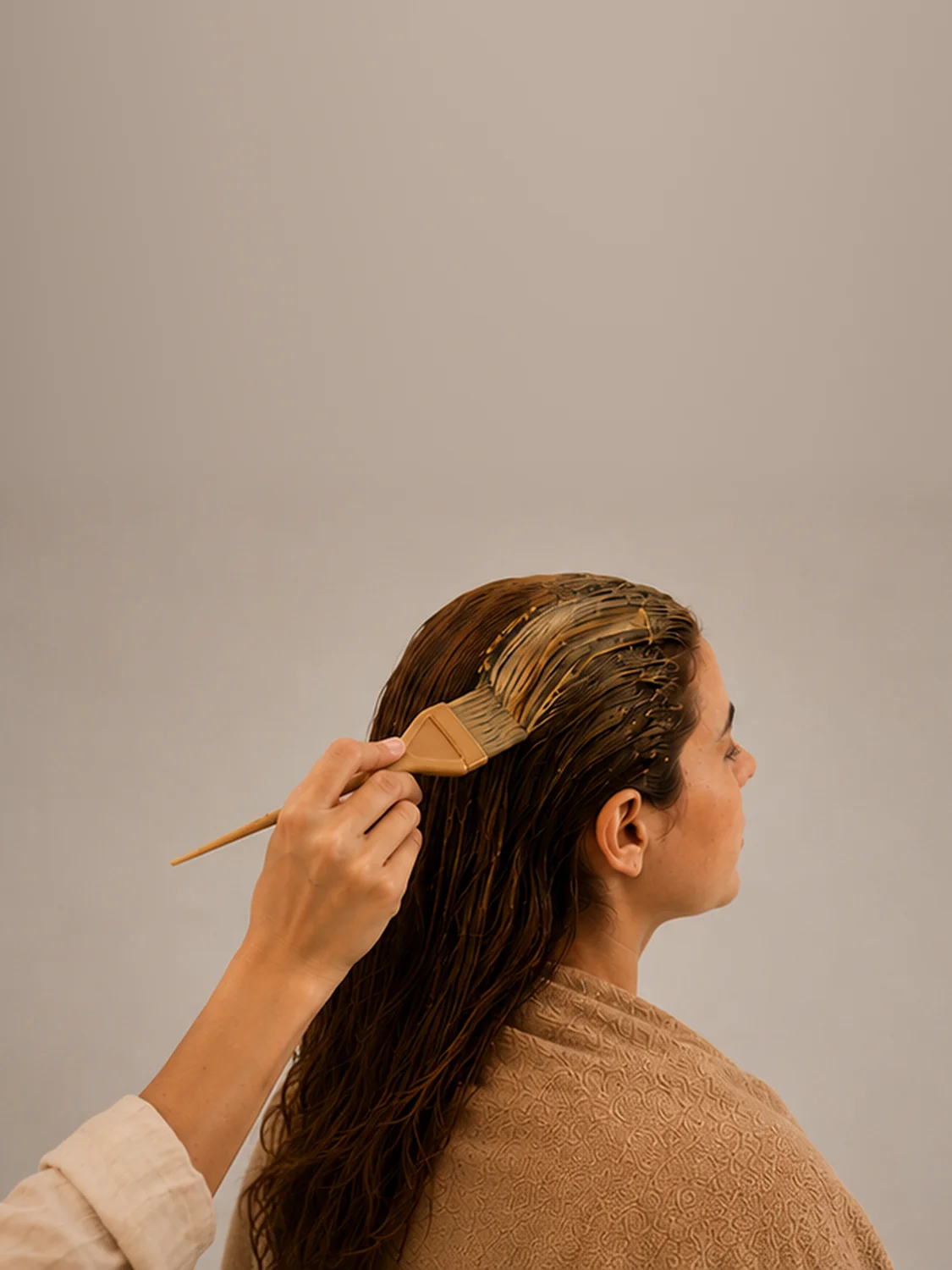
The application is one of the good parts of the ritual: the muds go on warm, over a clean scalp and damp hair, and they give off no harsh smells. While they work, you simply rest.
Each plant takes its time
Every blend has its own rhythm: Cassia works in ten to twenty minutes; Lawsonia, depending on the intensity we are after, between half an hour and an hour; walnut gives a hazelnut brown in half an hour and a deep one in an hour. Exposure time is part of the formula, not a wait.
And stubborn greys, blondes? Also possible: combining plants achieves full coverage, and we have fine-tuned our blondes — no trace of orange tones. What your specific hair can achieve, we tell you at the diagnosis, honestly.
Pregnancy, transition and your first time
With no ammonia, PPD or peroxides, muds are the usual alternative for keeping your colour through pregnancy and breastfeeding, and a good option for sensitive scalps. And there is no need to wait for your dye to grow out: the transition is progressive — session by session, the hair sheds residue and the mud gains ground.
And touch-ups? The roots tend to ask for one every six weeks or so, though the exact rhythm is set with you at the diagnosis — it depends on your hair and how the colour lives on it. And if you too want to make the move to hair muds, we will be waiting for you at Mi Momento.