Henna for hair: what's true and what's legend
A Mi Momento guide
Guide No. 9
Henna is the most famous of the tinting plants — and also the most surrounded by myths. Since we've spent years working with it (and with its sisters), let's set the record straight.
What henna actually is
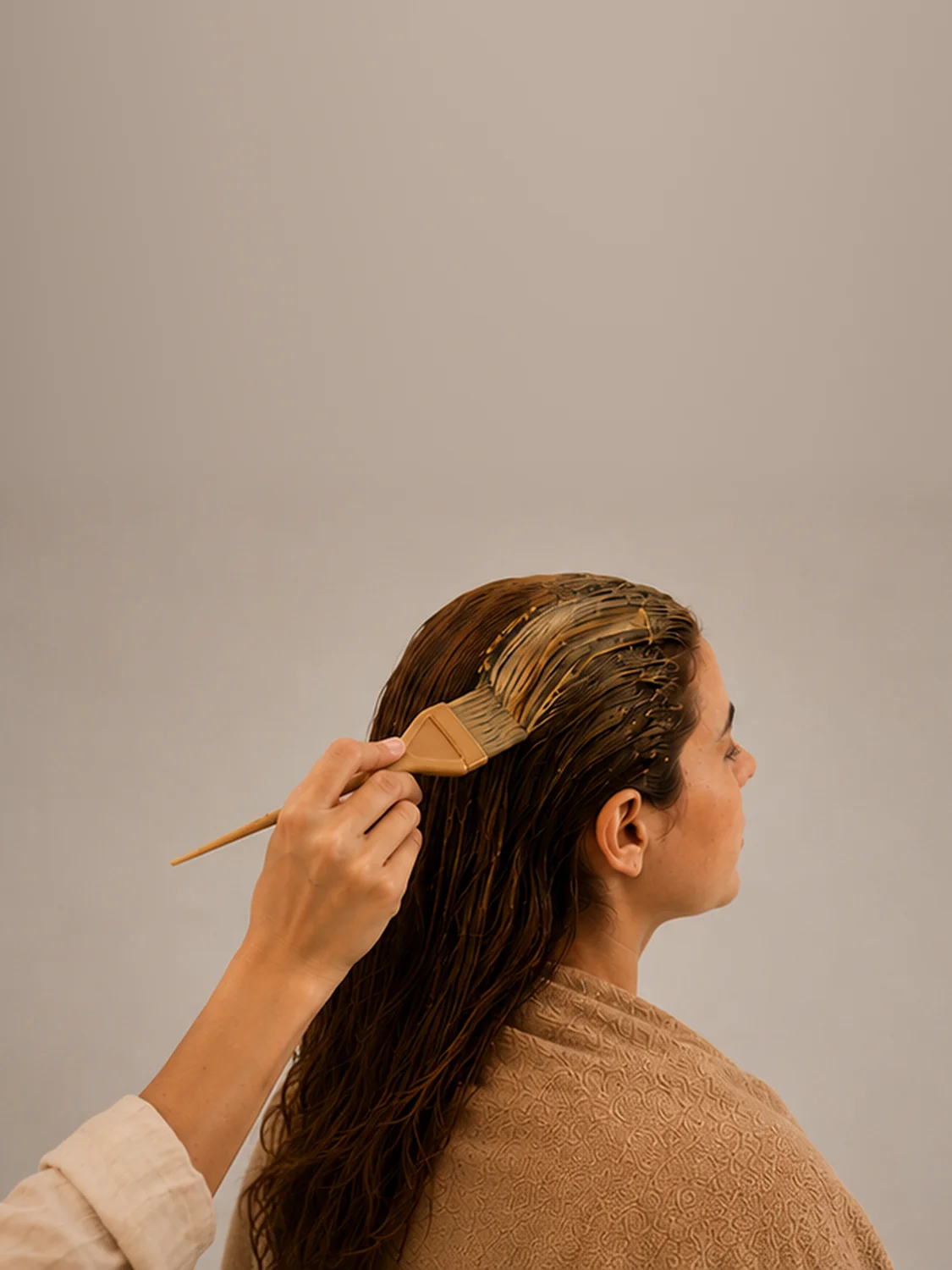
Henna is a single plant: Lawsonia, the queen of all tinctorial plants. Ground and mixed with hot water, it releases a pigment that wraps around the outside of the fibre and gives those reddish, coppery tones that have made it famous for centuries.
And besides colour, it treats: it adds protein, removes frizz, hydrates and helps stabilise shedding from the first application. That's why Lawsonia is the base of almost all our formulas.
Henna and hair muds: the note and the chord
Henna alone gives what it gives: the reddish, coppery range. Hair muds — what we do at the salon — are blends of several plants: Lawsonia is almost always there, joined by Cassia for golden light, Indigo for browns, walnut for deepening the tone…
With the blend, browns, hazelnuts, worked blondes and full grey coverage open up — things a single plant can't reach on its own. Your blend is prepared for you after the diagnosis, not poured from a standard jar.
Want to try it on your hair?
How to tell if a henna is pure
A home trick: colour and smell. A pure, 100% plant henna has a dull greenish colour and smells of herbs. If the powder is a very dark black or smells of chemical product, be suspicious: there are “hennas” on the market full of additives — some even containing PPD, exactly what you came here to avoid.
And an honest heads-up: if your hair has been coloured with a henna of doubtful composition, tell us at the diagnosis. Chemical residue from an adulterated henna can react badly with other processes, and we would rather know before touching anything.
The legends, in the bin
“Henna turns your hair green”: not with a pure henna — the scares come from adulterated ones or badly made blends. “You can't go back to dye after henna”: you can, with judgement and a diagnosis. “Henna is only for covering greys”: greys aren't covered, they're glazed — and the reflection that's left is beautiful.
If you're curious about plant-based colour, start at the beginning: a micro-camera diagnosis and all your questions answered. We will be waiting for you at Mi Momento, at Carrer de Verdi 49, in Gràcia.
Frequently asked questions
Is henna also a treatment, or just colour?
It is one of the most treating plants there is: it brings protein, removes frizz, hydrates and helps stabilise shedding from the very first application. The colour is only half the story.
What colour does henna give?
Pure Lawsonia gives the reddish, coppery range, with the intensity depending on exposure time: between half an hour and an hour. For browns, golds or other tones it's blended with other tinctorial plants.
Can I use chemical dye after henna?
With a pure henna and a good diagnosis, yes — the transition is planned and there's no drama. The risk lies in hennas adulterated with metallic salts or PPD, which can react badly with chemistry. That's why we always ask what's on your hair before touching anything.