JournalChemical-free colour
Grey hair transition: how to stop dyeing without a buzz cut or months of two-tone roots

In this guide · 8 sections
- 01The three ways to stop dyeing
- 02Cover it one hundred per cent or see it made up? The question we ask you
- 03What happens to the dye you already have
- 04The phases of the grey hair transition, session by session
- 05How long it takes and how it looks depending on where you start
- 06Grey hair transition with highlights: Yolanda, before and after
- 07What changes along the way, besides the colour
- 08Grey hair transition in Barcelona: we are waiting for you in Gràcia
Growing out your greys does not mean choosing between a drastic chop and months of white roots on top of dyed lengths. There is a third way: glaze the grey with hair muds while the dye grows out. Here is what the grey hair transition looks like at the salon, phase by phase, with clients who came from dye, from highlights or who had never dyed at all.
In short
How do you do a grey hair transition without cutting your hair?
The grey hair transition with hair muds means glazing the greys as they come through and dressing the dyed lengths while they grow out, with one session every six weeks. The grey is not covered: it becomes a light reflection within your colour, and the dye leaves with the growth, without the two-tone line ever showing.
The three ways to stop dyeing
Anyone who decides to grow out their greys usually has the same picture in mind: the silver root on top, the box colour below and a line creeping down millimetre by millimetre. That line is why so many people end up with a drastic chop, or back at the dye after three weeks.
| Route | What you do | What you see along the way | What it asks of you |
|---|---|---|---|
| Cut it off and start from zero | A very short cut that removes the dyed lengths in one go. | Your natural grey from day one, with a big change of look. | Wanting short hair. |
| Let it grow | You stop dyeing and wait for the dyed lengths to leave with the growth. | White or grey roots over the dyed lengths, with a line that moves down as your hair grows. | Patience, and months with two-tone roots. |
| Transition with hair muds | Muds on the root and the dyed lengths, roughly every six weeks. | The grey glazed as a light reflection within your colour, with no line, while the dye leaves with the growth. | Accepting that the grey looks made up, not covered. |
The third route is ours, with hair muds: ground tinctorial plants that colour the outside of the hair, with no ammonia or PPD, a chemical commonly found in conventional dyes.
Cover it one hundred per cent or see it made up? The question we ask you
It is one of the questions that weighs most in the consultation, and it decides whether a plant-based transition suits you. Noe came in wanting to swap conventional dye for something more natural, and curious about the muds. When she said she would like to cover her greys, we asked her: “Do you want to cover the grey 100 % or would you not mind if it looked like this, translucent, made up?” “Well, yes, it looks sort of disguised too,” she answered, and that is where we started.
Hair muds cannot cover grey, because they are plants and not a dye. The plant wraps around the hair from the outside and glazes it: on a grey it leaves a light, warm reflection, and on a dark base, a deeper brown. The grey is still there, blended into your colour like a reflection of light. That is what we told Jessica, who had been using conventional dye all her life and wanted her greys to blend with her colour: “Muds do not cover greys, they glaze them”.
There are muds on the market that do cover grey one hundred per cent, because they contain chemicals; ours do not. Sara, seven months pregnant and with a lot of grey, came for exactly that: “My idea is to cover the grey 100 %,” she told us. We answered that a mud was not going to cover it for her and that, if it did, it would contain chemicals. If you want an invisible grey, the way dye leaves it, this route will not give you that. If you are happy to see it made up, in the light, a plant-based transition may suit you.
What happens to the dye you already have
You do not need to wait for dyed hair to grow out or cut it to get started. The muds go on the root and on the dyed lengths too: from the first session the new grey is glazed and the rest of the hair is toned so the whole head looks even. The dye you already have does not come out in one go: it leaves as your hair grows and gets cut. We explain how muds differ from other plant-based dyes in the plant-based dye guide.
Patry used colour baths for her few greys, a chemical colourant that, like dye, leaves a mark as the hair grows. She tried the muds in an improvised session and Eva explained the difference: with them “there is no mark at all” as the hair grows. The colour melts into the new hair like a gradient and does not make you come back every month to dye. That is why the grey hair transition goes smoothly from the very first day. Patry left with hair that was “very shiny, juicy and the greys looking very natural, very blended in”.
The phases of the grey hair transition, session by session
Every transition is different, but the route looks much the same:
The consultation
We look at your hair and scalp with the microcamera, a camera that magnifies the skin and the base of each hair, and we work out what percentage of grey you have and where: it is common to have far more at the front than at the back. You leave with a plan and a fixed quote.
The base, if needed
If the microcamera shows an irritated scalp or follicles (the point where each hair grows from) blocked by silicone residue, we start with a scalp oxygenation, a deep cleanse that calms irritation. With Yolanda, who had highlights and toner, it was the first step.
The first mud session
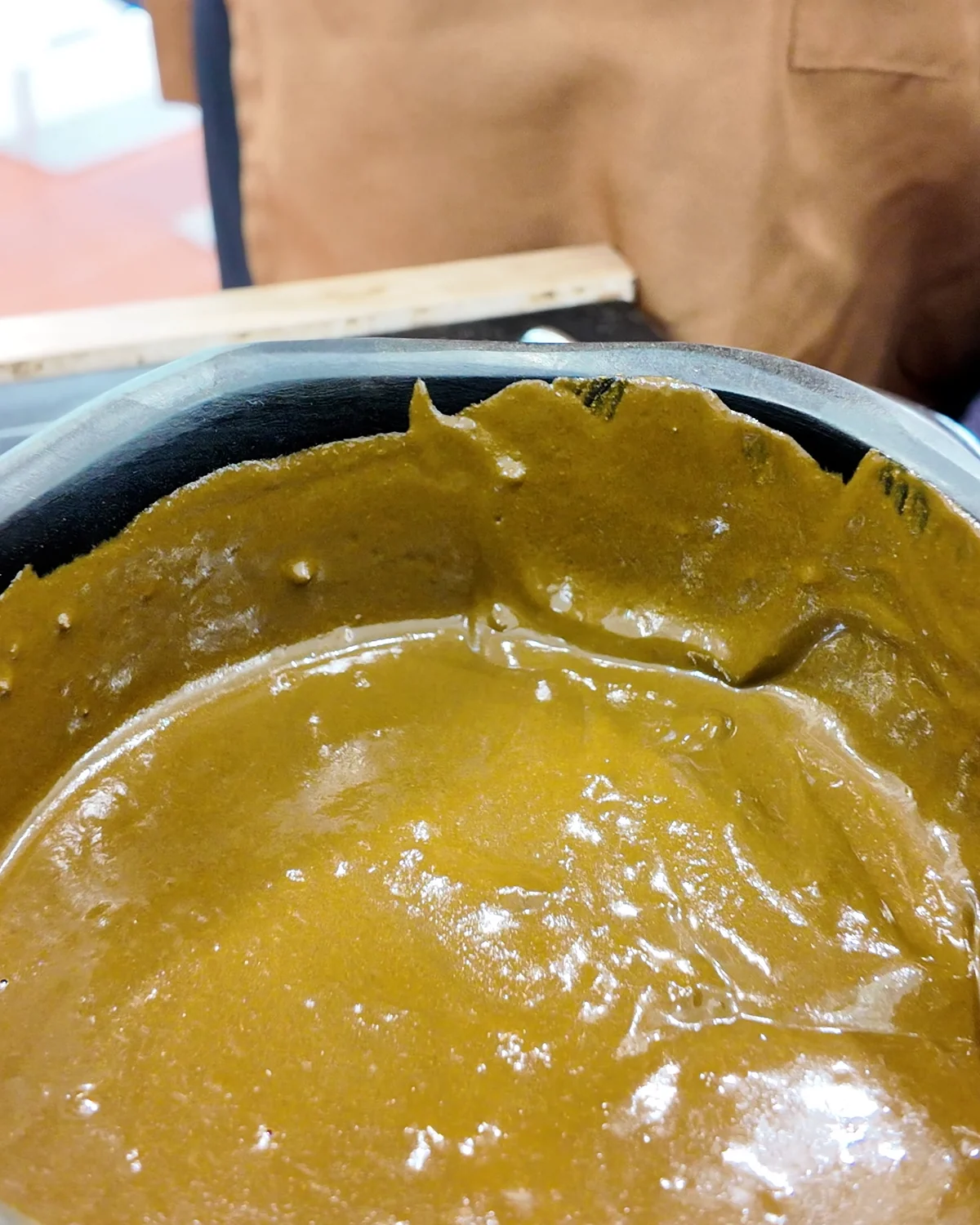
Unlike dye, the muds are applied hot on freshly washed hair that is still damp. They are left to work for as long as your blend needs, rinsed out, and the hair is moisturised. That same day you can already see the grey glazed.
Six weeks later: the second session
We glaze the new root again and decide with you whether to repeat the colour or vary the plants to change the reflection; that is what we agreed with Vero at the end of her first session. The muds build up: with every application the grey blends more with your own grey.
The following months
Each session repeats the same gesture. Meanwhile, the dyed lengths move down with the growth and disappear with the cuts, and the two-tone line never gets drawn.
Hair muds at Mi Momento
Want to try it on your hair?
Hair muds: plant-based colour that glazes grey hair and cares for the scalp.
- Price
- from €120
- Duration
- 90 min
- Where
- Carrer de Verdi 49, Gràcia
Hair muds: plant-based colour that glazes grey hair and cares for the scalp.
- Price
- from €120
- Duration
- 90 min
- Where
- Carrer de Verdi 49, Gràcia
How long it takes and how it looks depending on where you start
It is a process of months, and how many depends on how much grey you have and where, how dark your base is, the dye you come in with and how fast your hair grows; we tell you at the consultation. What we can tell you is what we aim for and how the grey looks depending on the starting point.
| Your starting point | What we aim for | How the grey looks | Who went through it |
|---|---|---|---|
| Dark base with a lot of grey at the front and little at the back | A warm brown at the front, where the grey reflects the pigment; at the back, your natural base, which is not altered. | Blended into the base colour, with no parting line; as it grows, a gradient. | Vero, with 70-80 % grey at the front; her case, with photos, is in the hair muds guide. |
| A lot of grey all over the head | A colour close to the one you had, at the root, and the rest of the hair toned so it looks even. | Glazed in an even tone, with the contrast between your colour and the grey much softened. | Fernanda, with around 80 % grey. |
| Few greys and no wish to go darker | Blend those greys in as reflections, without putting your own colour over them, which would leave you very dark. | With a highlights effect: the few greys turn into light. | Sonia, who feared ending up very dark, with a caramel; Agustina, with a lock of greys that turned caramel; Patry, with her greys blended into the subtle balayage of her brunette hair. |
| Blonde with highlights and a lot of grey | A blend of plants of our own so the blonde blends with the highlights, with no orange tones. | Blended into the blonde, with lots of shine. The muds do not lighten, but the tone improves. | Yolanda, with 70 % grey; Marga, with the front full of greys. |
| Never dyed and with grey at the front | Luminosity: glaze the grey and let it stay there, with light. | Glazed and luminous; the greys are still there. | Andrea, who had never dyed because she likes her greys. |
Each row sums up what we aim for with one or two clients of the salon. How many sessions yours needs, we will tell you at the consultation.
Fernanda has around 80 % grey. She wanted the contrast between her colour and the grey to be less noticeable. We prepared a colour close to the one she had, applied it at the root and, at the end, toned the rest of her hair with a mud water so it would look even. Her verdict: “Really good, I love the colour, the grey came out even”.
Andrea starts from somewhere else: she had never dyed, because she likes her greys, and she has a lot of grey at the front. “It is not resignation about the greys, it is because you like them,” we told her. With her the muds hide nothing: they glaze the grey and give it luminosity. For that highlights effect, one of our favourite plants is Cassia, which gives a golden, beige reflection, very subtle and not orange at all.
Grey hair transition with highlights: Yolanda, before and after
Anyone with highlights tends to have one doubt: whether the blonde will turn orange with muds. Yolanda, a blonde with 70 % grey, used to have highlights and toner, a shade that corrects the blonde of the highlights. We started with a scalp oxygenation; then we prepared her plant blend, applied it on clean hair and finished with a water micro-particle treatment, a fine mist that helps the treatment penetrate further.
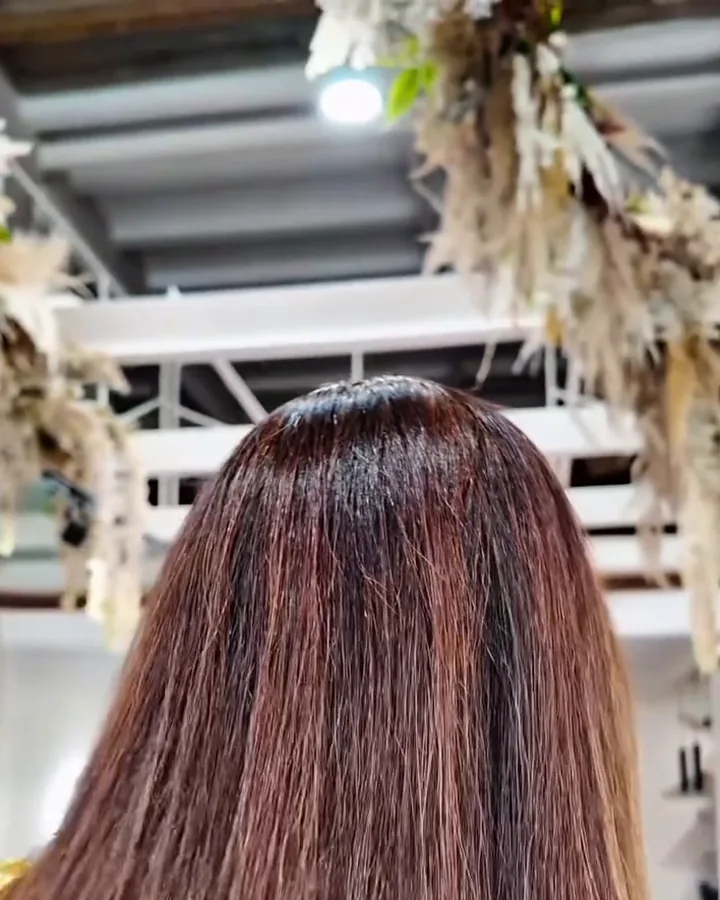
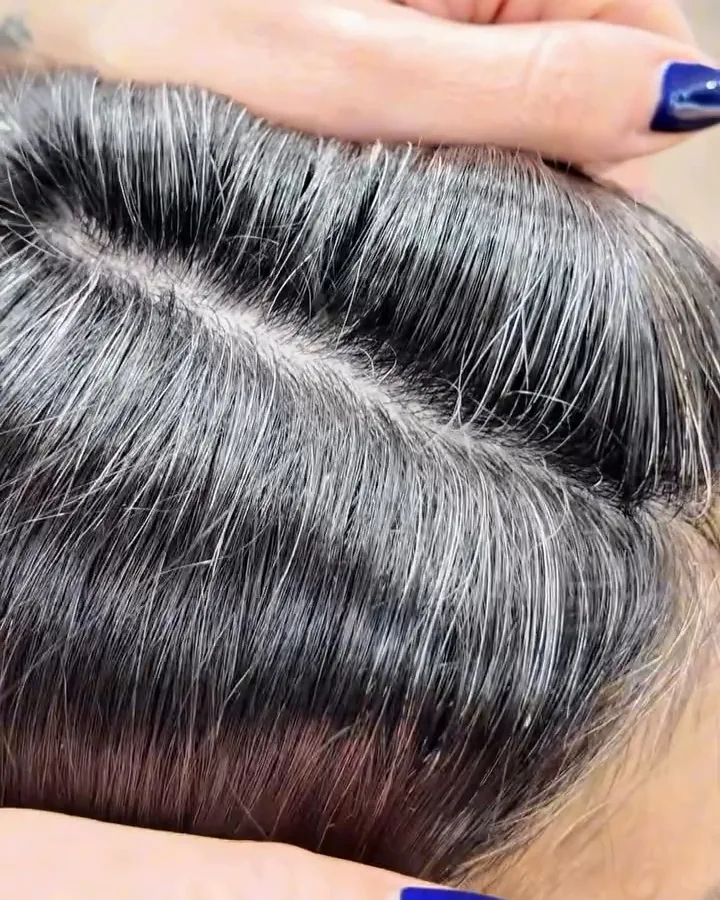
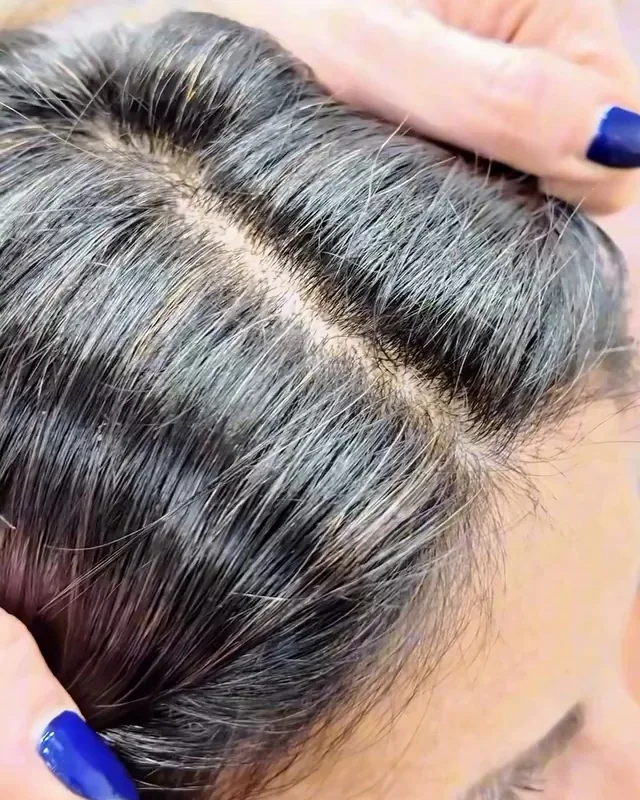
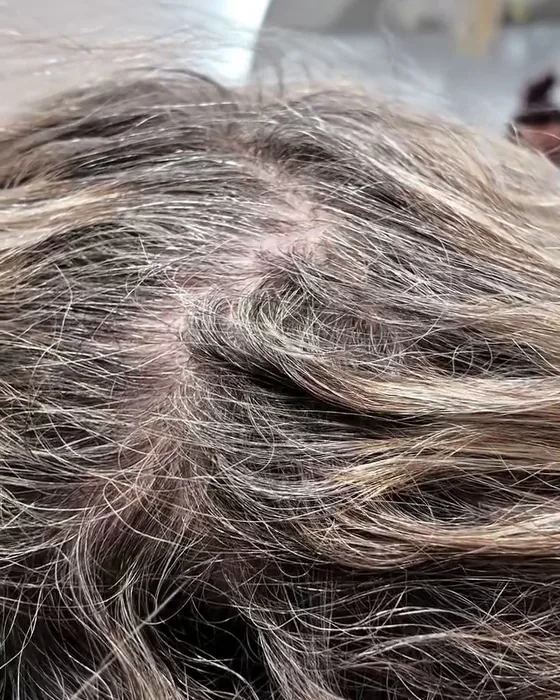
Three stills from the same video: how she arrived, the root once finished and her hair from behind.
i.
Before
Blonde hair with highlights, with the grey showing at the root.
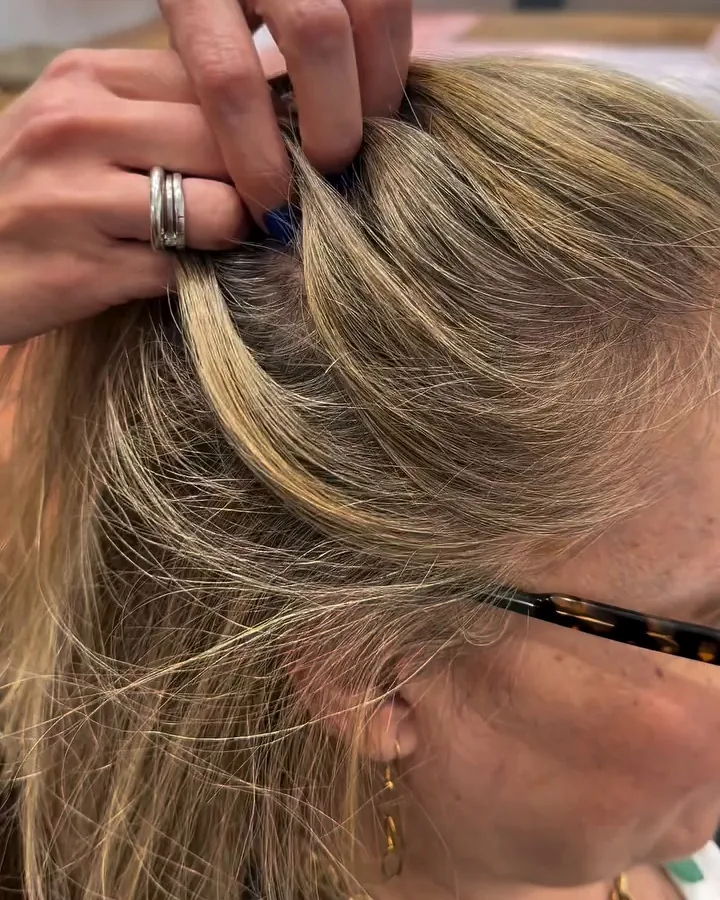
ii.
After
The root once finished: the grey glazed in golden blonde and blended in.
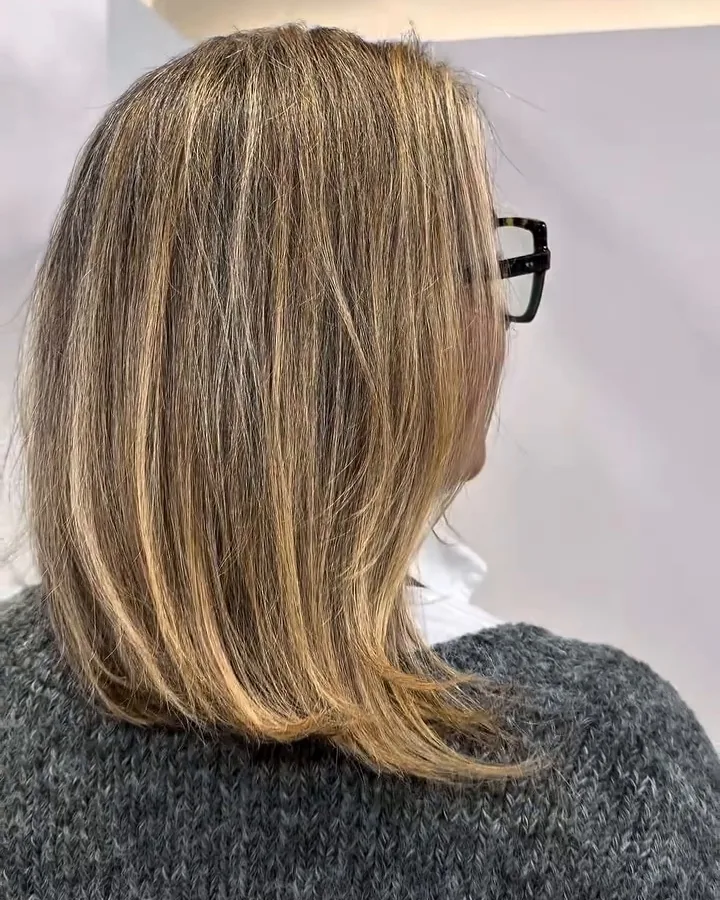
iii.
The result
“Totally blended greys, so much shine.” The tone improved without lightening, because muds have no lightening power.
Stills from the video of her session, which we published on our Instagram in March 2026. Unretouched.
Marga, who had highlights and the front of her hair full of greys, is another ideal case: the reflection of the muds is similar to that of her highlights, and the blonde came out blended, with no trace of orange tones. That is why we recommend doing this transition at the salon: highlighted hair is porous, absorbs pigment easily, and with a badly made blend it picks up tones you do not want.
What changes along the way, besides the colour
There is a part of the grey hair transition that does not show in the parting: the muds are a treatment as well as a colour. They look after the scalp, which may have been getting irritated for years with every touch-up, and they give the hair protein instead of drying it out. Sara, who came from chemical dyes, noticed a pleasant sensation of warmth and no itching at all, very different from her usual dyes. That is why many women choose this route during pregnancy or when the scalp no longer tolerates dye.
Which plants we use and what the first appointment is like is in the hair muds guide. Hair muds cost from €120, with the quote fixed at the consultation, and the appointment lasts about 90 min; the details are on the hair muds service page.
Grey hair transition in Barcelona: we are waiting for you in Gràcia
If you want to start your grey hair transition, come with your roots just as they are: we have seen them all. We leave the consultation with a plan: what reflection, what rhythm and what budget. We are waiting for you at Mi Momento, our organic hair salon in Gràcia, Barcelona: Carrer de Verdi 49.
Chemical-free colour
Frequently asked questions
How do you disguise the grey hair transition while your hair grows?
By glazing the grey as it comes through with hair muds: it becomes a light reflection within your colour, not a white root, and since the rest of the hair is toned in the same session, there is no line to hide.
How do you get dye out of your hair to grow out your greys?
Dye that is already in the hair does not come out in one go: it leaves as your hair grows and gets cut. Meanwhile, the muds go on the root and the lengths so the change is not noticeable.
Can you do the grey hair transition with highlights?
Yes. Yolanda, with 70 % grey, and Marga, with the front full of greys, had highlights and switched to muds: the blonde came out blended with their highlights, with no orange tones. It is best done at the salon: highlighted hair is porous and absorbs more pigment than you want.
Do you need to cut your hair to stop dyeing?
No. Cutting is an option, but not a requirement: the transition with muds is done at your length, because they glaze the grey and tone the dyed lengths, and the new hair draws no line as it grows.
What if I have few greys and do not want to go darker?
We work a tone that blends them in as reflections, without putting your own colour over them. Sonia, who feared ending up very dark, got a caramel tone with a highlights effect.
What if halfway through the transition I decide I do not want to see my greys?
The blend is adjusted to give more colour, within what muds allow, which is not one hundred per cent coverage. The process is gradual and decided session by session, so you can change your mind without going through a cut.
Keep reading
Our services
Plant-based colour, at the salon
Would you rather we looked at your hair?
Every service starts with a diagnosis of your scalp and your hair. That is where we tell you what suits you and what does not.