JournalChemical-free colour
Plant-based hair dye: what natural hair dye is, whether it covers greys and how long it lasts
In this guide · 10 sections
- 01What plant-based hair dye is (and what it is not)
- 02How can you tell if a dye is only plant?
- 03“Ammonia-free” dyes: what it means and what it does not
- 04Plant dye, henna and hair muds: which is which
- 05Does plant-based hair dye cover greys?
- 06How long plant-based colour lasts compared with chemical dye
- 07Plant dye on blonde or highlighted hair: Marga's case
- 08What plant dye cannot do
- 09From conventional dye to plant dye: Jessica's first time
- 10What plant dye costs in Barcelona
“I wanted a change from conventional dye and to try something more natural,” Noe told us when she arrived at the salon. Her next question was about her greys: she wanted to cover them. For both, the answer usually starts with plant-based hair dye. But very different products are sold under that name, and some contain the same chemistry as the dye you want to leave behind.
In short
What is plant-based hair dye?
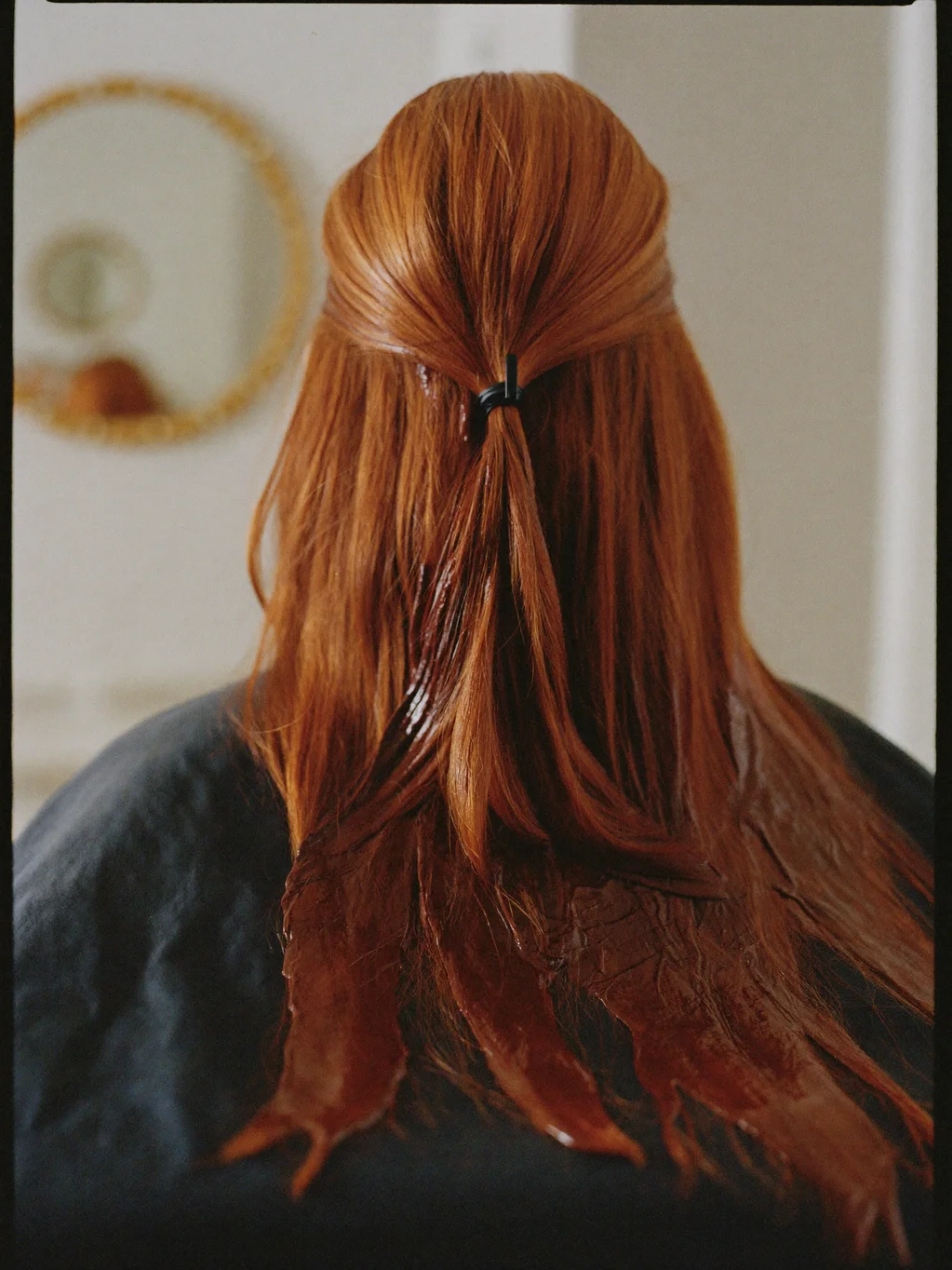
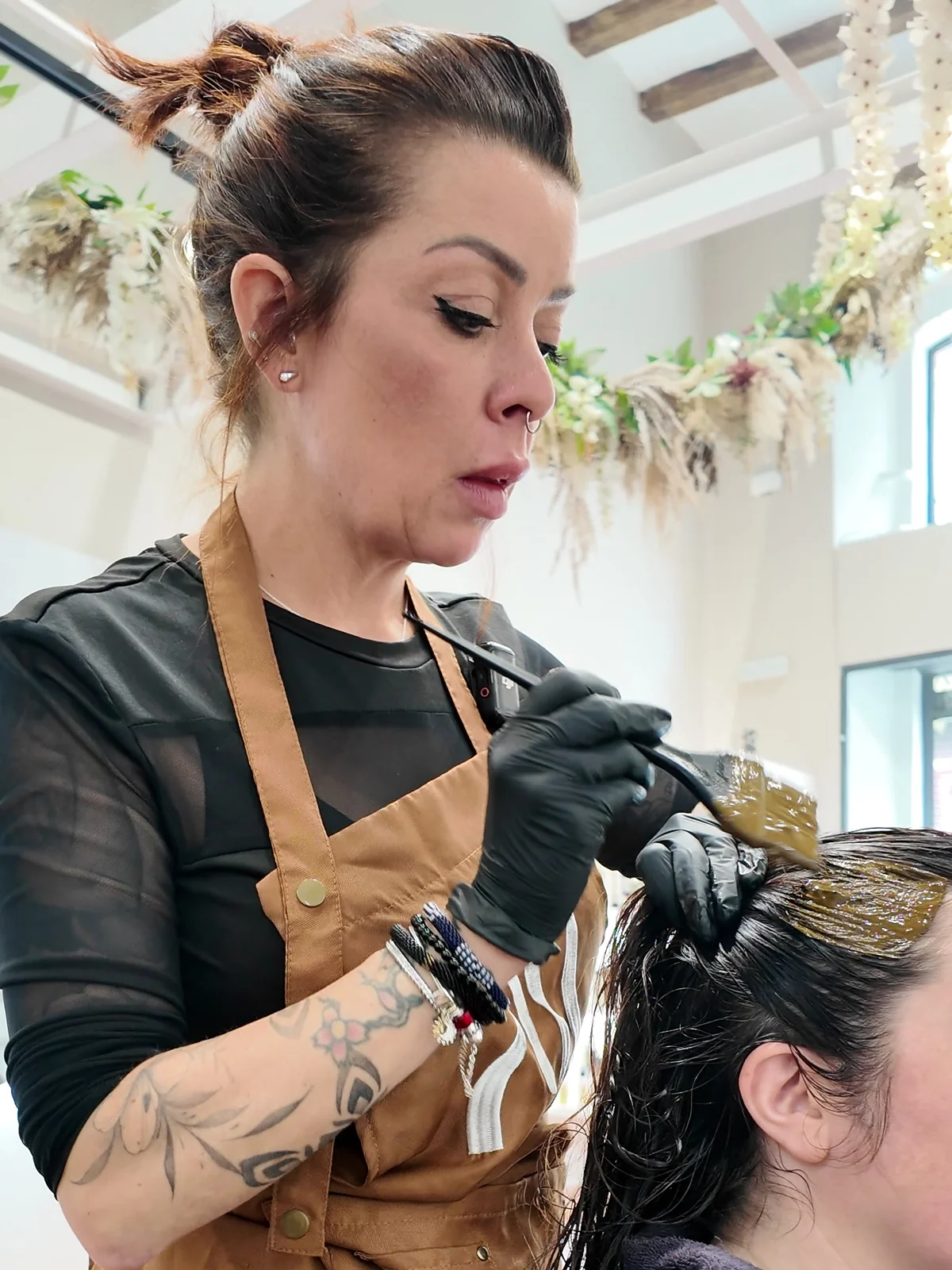
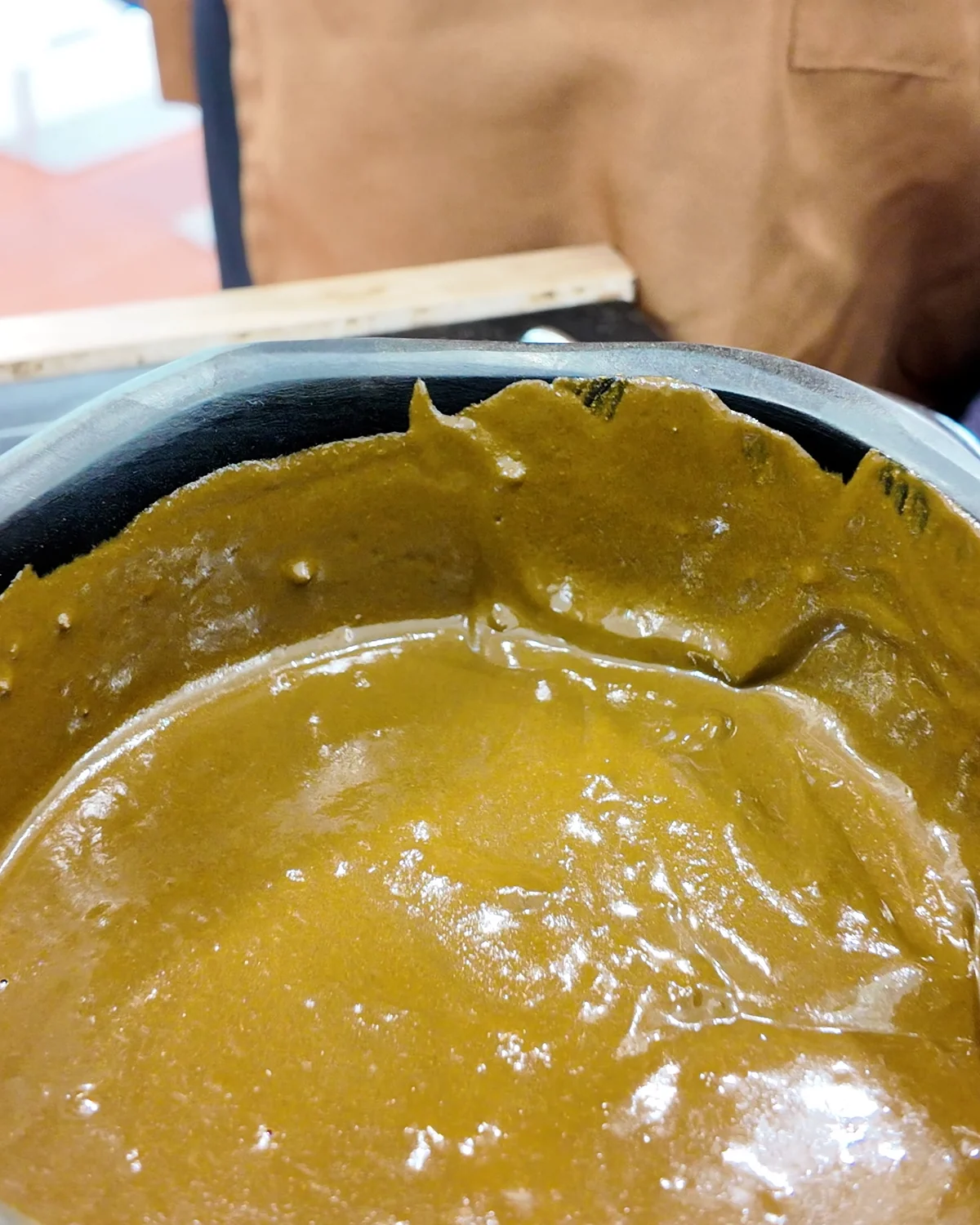
Plant-based hair dye is colour made from tinctorial plants (the ones that give colour), such as henna (Lawsonia), Cassia, Indigo or walnut, ground and mixed with hot water, with no synthetic chemicals. It is sometimes called natural hair dye, but that name is also given to dyes that do contain chemicals; below, we explain how to tell them apart. The colour stays on the outside of the hair, with no ammonia, no PPD (a chemical colourant that can cause allergies) and no hydrogen peroxide, so it cannot lighten your hair or cover greys: it varnishes them, that is, it leaves a translucent layer of colour, like a reflection of light, and blends them into your colour. At Mi Momento we do it with hair muds, a blend of tinctorial plants, clays and minerals prepared for you.
What plant-based hair dye is (and what it is not)
A real plant-based hair dye is nothing but plant: dried, ground tinctorial plants that, once mixed with hot water, activate and release their colour. The pigment stays on the outside of the hair, wrapping around the fibre, instead of opening it and changing the colour from the inside, which is what an oxidative dye does (the conventional kind, which needs hydrogen peroxide to work). That is why a plant-based hair dye contains no ammonia, no PPD and no hydrogen peroxide, the three usual ingredients of conventional dye. Nor can it lighten, that is, leave your hair lighter than it is: it adds to the colour you already have.
The problem is the label. Under names such as natural hair dyes, organic dye or plant-based hair dye, three different things are sold, and only one of them is plant:
- Pure plant-based hair dye. Tinctorial plants with water. Henna (Lawsonia) gives coppers and reds; Cassia, soft golds; Indigo and walnut, browns. Hair muds are a blend of several, with clays and minerals. It is the only one of the three that contains no chemicals.
- The “ammonia-free” dye. It is an oxidative dye: it is mixed with a second bottle, the developer, and usually contains PPD. It swaps the ammonia for another ingredient, but your hair notices all the same. What “ammonia-free” means exactly, we explain a bit further down.
- “Compound” henna from a herbalist's or supermarket. Not all of it is only plant: some contain the same chemistry as a conventional dye. You notice afterwards: that hair can no longer be lightened.
How can you tell if a dye is only plant?
Three signs, without reading all the small print:
- Look at the ingredients. A pure plant-based hair dye contains only plant powder, listed by its Latin names: Lawsonia inermis (henna), Cassia obovata, Indigofera tinctoria (Indigo). If PPD (p-phenylenediamine), resorcinol or a developer appear, there is chemistry in it.
- Check how it is prepared. You mix it with hot water and that is it. If it asks for a second bottle, a developer or an “activator”, it is an oxidative dye.
- Be wary of the promise. If it guarantees to cover greys one hundred per cent, it is not only plant: plants varnish, they do not cover.
“Ammonia-free” dyes: what it means and what it does not
You will see “ammonia-free” on many packs, and it is often mistaken for natural. It is not the same. An ammonia-free dye is still an oxidative dye: it replaces the ammonia with another ingredient to open the hair, it is mixed with hydrogen peroxide and it contains colourants such as PPD, which can cause reactions on the scalp. We see it at the salon: some people arrive using an ammonia-free dye and still find their hair very dry, and we put it down to the amount of PPD. Semi-permanent colour is not plant either: it is a chemical colourant and, like dye, it leaves a line as the hair grows.
A pure plant-based hair dye does not need that qualifier: it has no ammonia because it does not have to open the hair, and no developer because it does not change the hair from the inside. That is why many women choose it when pregnant, breastfeeding or with a sensitive scalp, and its limits come from the same place: it does not lighten and it does not cover greys. That said, a plant can also cause a reaction: if it is your first time with plants and your blend contains Indigo, we do an allergy test on your arm first; and if you are allergic to nuts, especially walnuts, tell us, because walnut can cause a reaction. If you have any specific concern, tell us when you book and we will go through it with you.
Plant dye, henna and hair muds: which is which
Henna, plant-based hair dye and hair muds are not synonyms. Henna is a single plant, Lawsonia, and gives warm reflections, from coppery to red. A plant-based hair dye can be one plant or several. And hair muds are what we do at Mi Momento: a blend of tinctorial plants, clays and minerals which, besides giving colour, is also a treatment. We formulate it for you at the consultation, the first appointment, where we look at your scalp and your hair with a micro-camera.
If it is henna in particular that interests you, it has its own guide. And what the first hair muds appointment is like, what colours the plants give and what you will notice, we cover in the hair muds guide.
| Type | What it contains and what colour it gives | What it does to greys | Can the hair be lightened afterwards? |
|---|---|---|---|
| Henna | A single plant, Lawsonia, with water. Warm reflections: coppery, reddish. | It varnishes them in copper or red; it does not cover them. | Yes, if it is pure henna, like the one we use at the salon. No, if it is a compound henna with chemicals. |
| Plant-based hair dye | One or several tinctorial plants with water. Golds, coppers or browns, depending on the plant. | It varnishes them and blends them in; it does not cover them. | Yes, if it is only plant, like the ones we use at the salon. |
| Hair muds | Tailored tinctorial plants, with clays and minerals. From golden to dark brown, and reds too. | They varnish them and blend them in with a highlights effect; they do not cover them. | Yes. Highlights or a balayage (blended highlights) can come later; we plan it at the consultation. |
| “Ammonia-free” dye | Oxidative dye: it replaces the ammonia with another ingredient, contains a developer and, normally, PPD. Any colour, lighter ones too. | It covers them completely, in a uniform colour. | Yes, like any oxidative dye. |
Plant-based hair dyes and hennas that advertise total grey coverage get it with chemicals. Our salon's muds contain none.
Does plant-based hair dye cover greys?
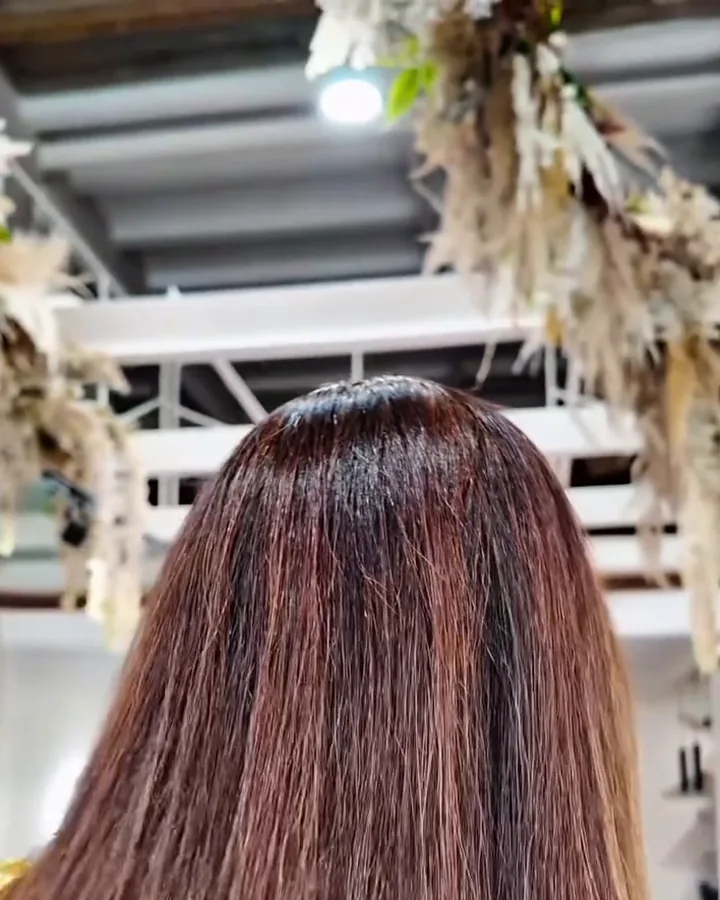
No, and we would rather tell you up front. Neither plant-based hair dye nor natural hair dyes for grey hair that are only plant cover grey hair, because they do not change the hair from the inside: the plant stays on the outside and varnishes it. The grey is still there, but in a lighter, warmer tone than the rest, blended into your colour, with an effect similar to fine highlights. And as it grows it leaves no line, because the new grey hair contrasts very little with the varnished grey.
At the consultation, the first thing we ask is what you want to achieve with your grey hair. We put it to Noe like this: do you want to cover it one hundred per cent, or are you happy for it to look translucent, subtle? She was happy to see it subtle. If your answer is to cover it completely, plant-based hair dye is not for you. If you are happy to see it blended in and with light in it, it is. Exactly how it turns out, with before and after photos, you will find in the hair muds guide.
How long plant-based colour lasts compared with chemical dye
It does not disappear all at once. The roots are touched up every six weeks or so, because new hair comes in without colour; the rest of the hair gradually softens and, whenever you like, it can be revived. Area by area:
| Area | What happens to the colour | What to do |
|---|---|---|
| The roots | The new hair comes in without colour. There is no hard line: the new grey hair contrasts very little with the varnished grey. | A touch-up every six weeks or so. We decide the rhythm with you. |
| The rest of the hair | It softens little by little and, because the plant does not oxidise the hair, it does not end up in the dull tone that dye takes on over the months. | It can be revived whenever you like, with a new application all over the hair. |
| Your shampoo at home | Shampoos with lots of sulphates, silicones and alcohols strip the colour and dull it, whether you have plant-based colour, hair muds or highlights. | A shampoo that is gentle on the scalp, with no sulphates or silicones. At the salon we work with Arkhé, a local brand, and we tell you what to use once we are done. |
Hair muds at Mi Momento
Want to try it on your hair?
Hair muds: plant-based colour that glazes grey hair and cares for the scalp.
- Price
- from €120
- Duration
- 90 min
- Where
- Carrer de Verdi 49, Gràcia
Hair muds: plant-based colour that glazes grey hair and cares for the scalp.
- Price
- from €120
- Duration
- 90 min
- Where
- Carrer de Verdi 49, Gràcia
Plant dye on blonde or highlighted hair: Marga's case
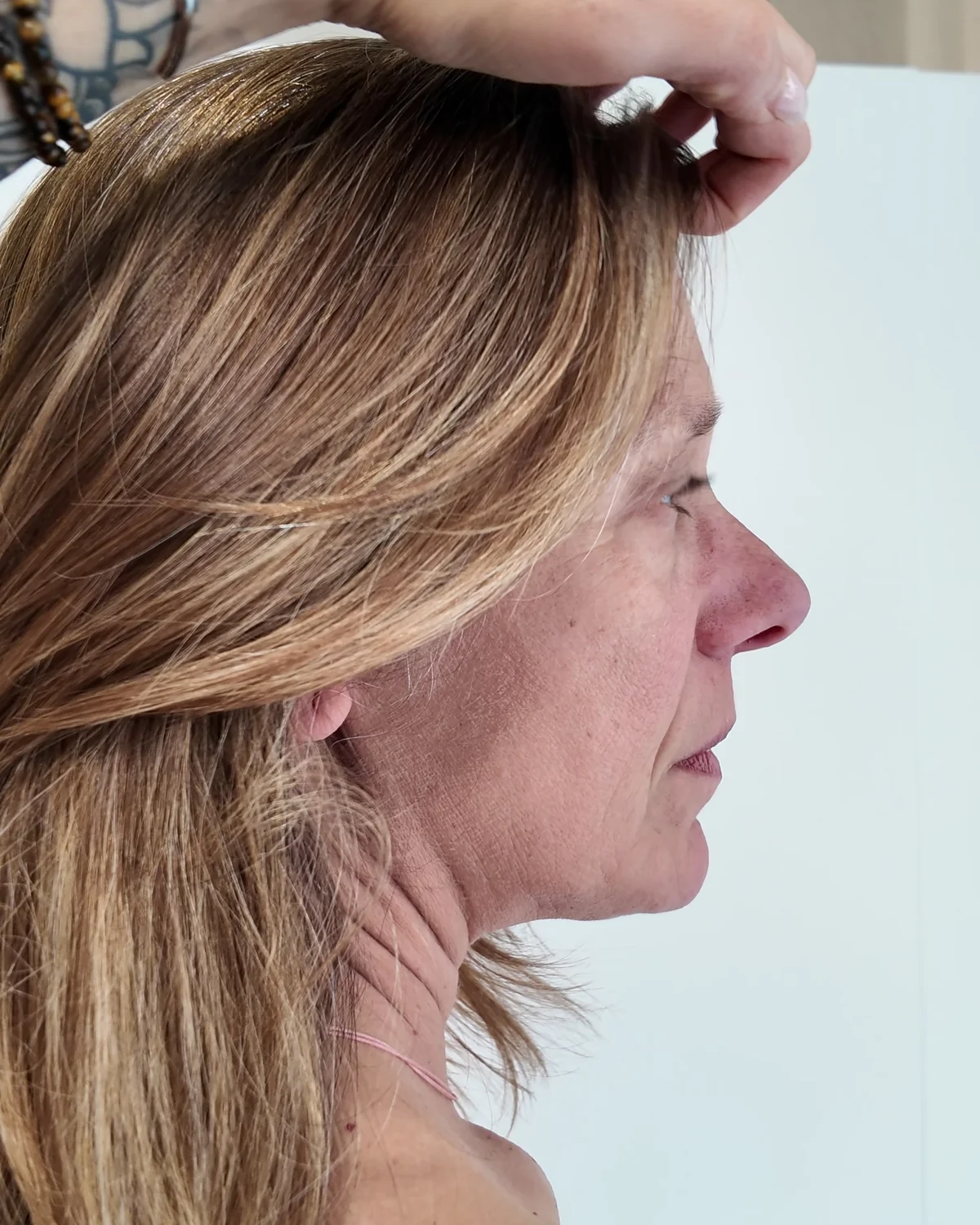
The question we get most from blonde clients is whether a plant-based hair dye will turn their hair orange. It depends on the blend. We tested many combinations on blonde hair before arriving at the one we use, and it is best done at the salon: highlighted hair is porous and, if the blend is not well thought through, it absorbs more pigment than you want. Marga came in with the front of her head full of grey hair over the blonde of her highlights. Hair muds suited her because they leave on the grey a reflection very similar to that of highlights. And if, like her, you are blonde and want to give your hair a rest from highlights and oxidising products, this is your case too.
This is how her session went: how she arrived, the muds applied and the result.
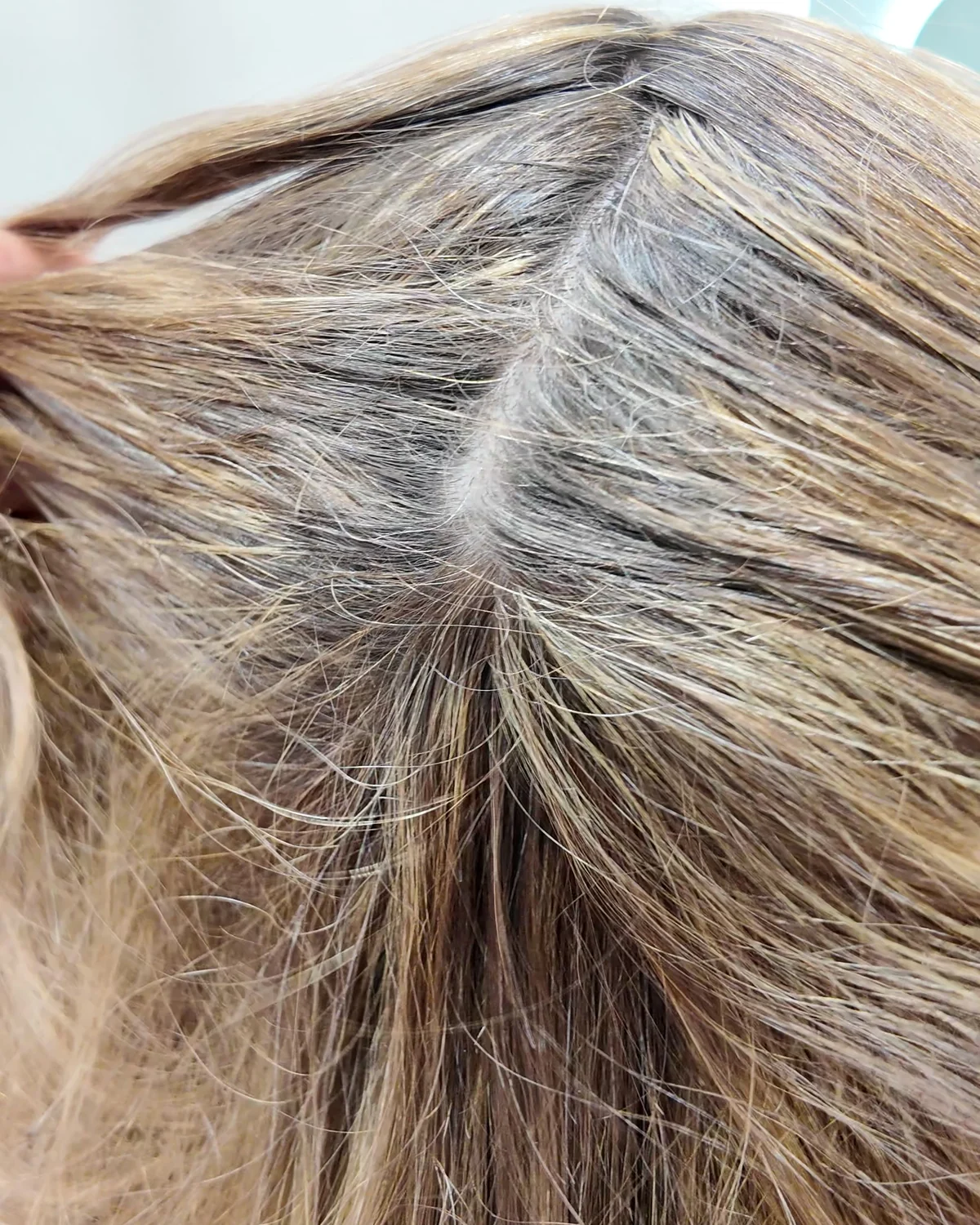
i.
Before
The front full of grey hair over the blonde of the highlights.
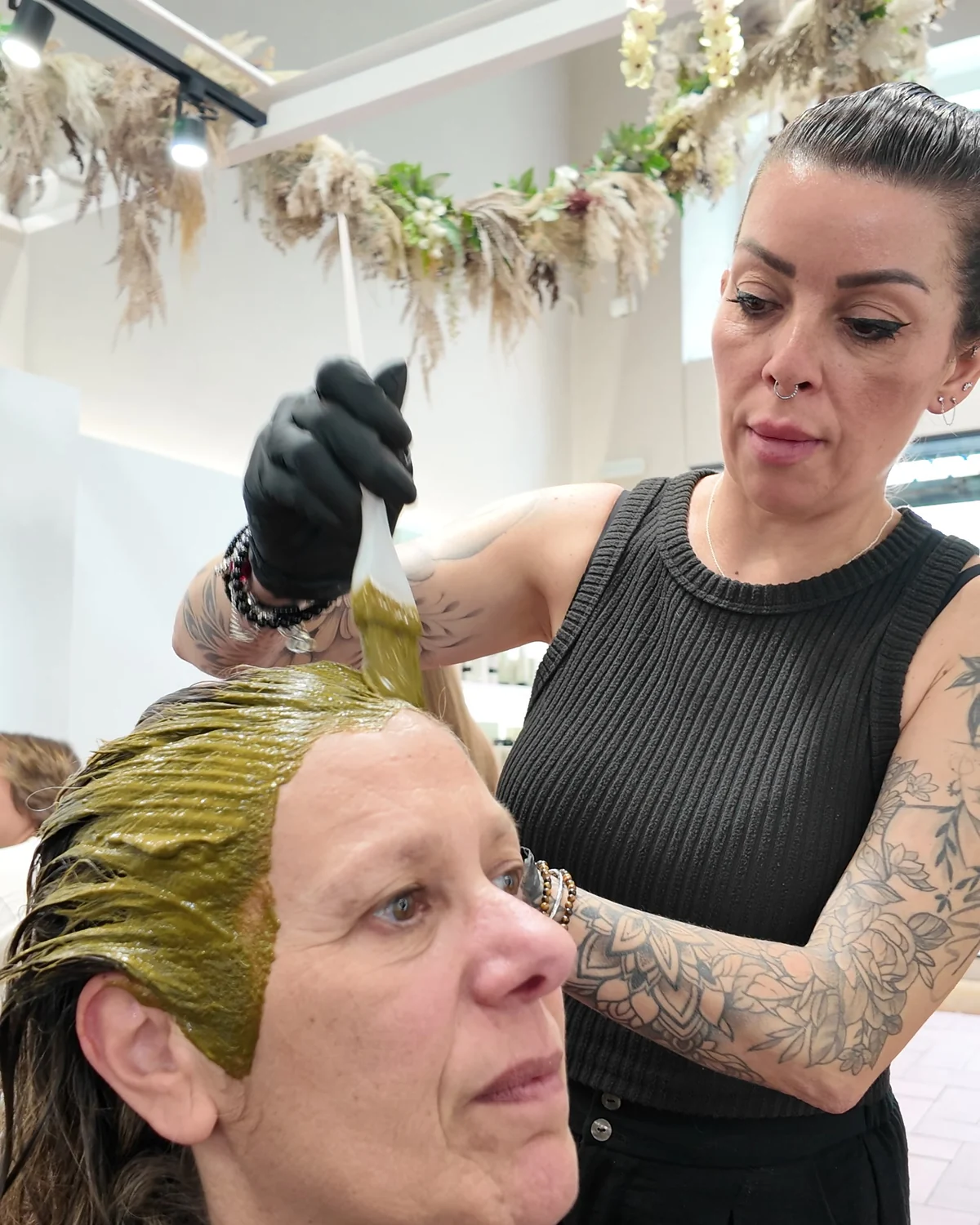
ii.
The muds, applied
The plant blend, applied hot, on clean hair.
iii.
After
The blonde blends in with her highlights, with no trace of orange tones.
Stills from the video of her session, which we published on our Instagram in June 2026. No retouching.
What plant dye cannot do
Its limits, plainly:
- It does not lighten. A plant cannot turn brown hair blonde or take you from black to blonde: the colour adds to your base. What can happen, as it did with Jessica, is that the overall look is less dark than the dye you came in with. A blonde with plant-based hair dye is only possible on hair that is already blonde or has highlights.
- It does not cover grey hair or give a uniform colour. It varnishes it and blends it in, with a highlights effect.
- It is not a dye for cool tones. The result leans warm; with walnut or Indigo you get browns with no orange reflection, and with our blend, blondes with no orange.
- It does not stop hair loss on its own. The plant hydrates, provides protein and helps balance the scalp (oiliness, flaking, itching), and the hair loss stabilises gradually. But first we look at why it is falling out.
- It cannot be applied in any old way on dyed, bleached or highlighted hair: porous fibre absorbs more pigment, and we plan the blend at the consultation.
From conventional dye to plant dye: Jessica's first time
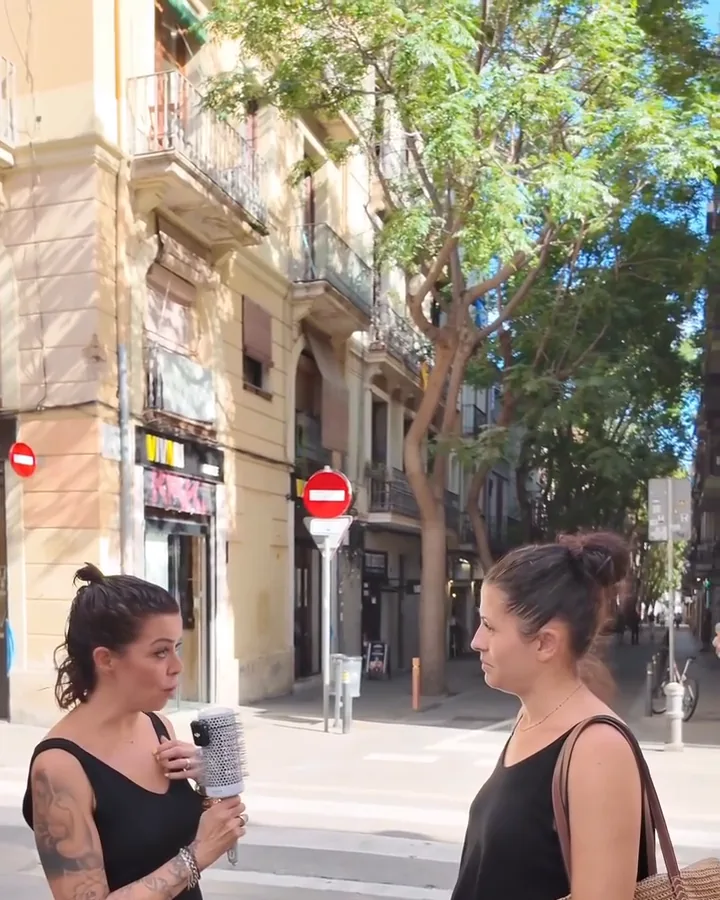
Jessica was dyeing her hair with conventional dye, “the classic kind”, and had heard about hair muds. She wanted her grey hair to blend in with her colour. Before we started, we warned her that hair muds do not cover grey hair, they varnish it, and that they are applied hot, with a clean scalp and damp hair, the opposite of a dye. When we finished, because her hair needed it, we gave her a hydrating treatment. How that change continues month by month, we cover in the guide to leaving dye behind and wearing your greys.
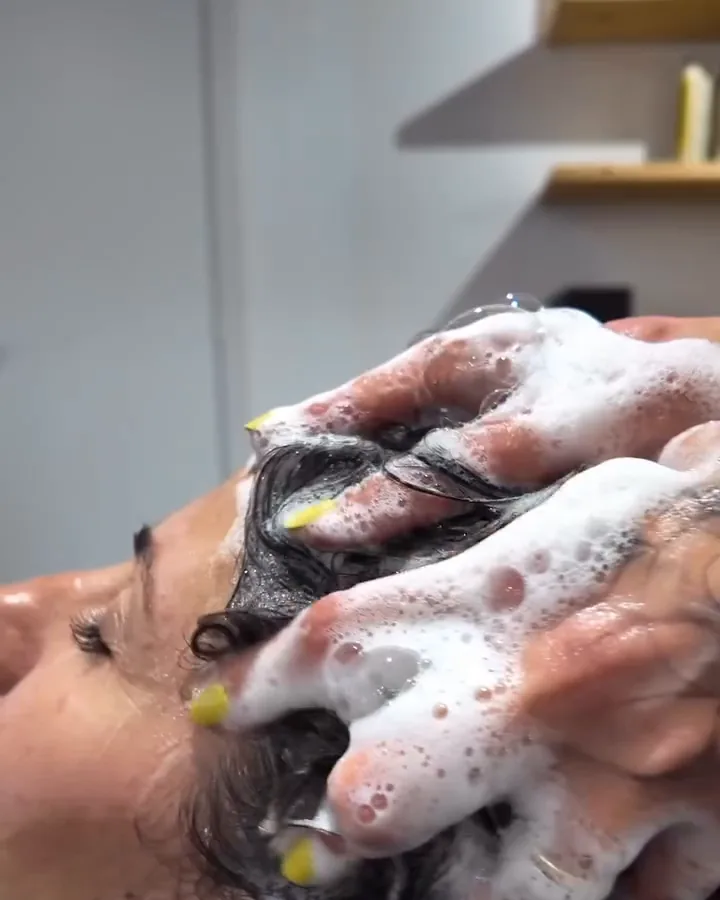
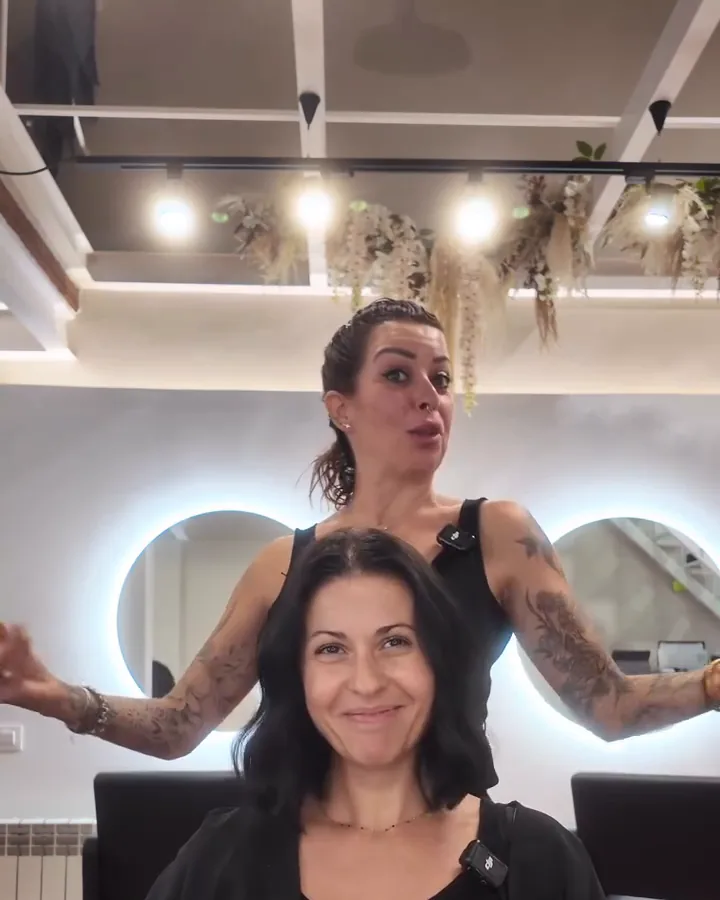
Her first appointment: how she arrived, the wash and how she left.
i.
Before
She arrives with the black hair from the conventional dye she had used until then.
ii.
The wash
First, a foam wash to leave the scalp clean.
iii.
At the end
The grey hair blended into her colour and the overall look slightly less dark than the dye she came in with. “I love it,” she told us. She left with the date of her first touch-up.
Stills from the video of her session, published on our Instagram. No retouching.
What plant dye costs in Barcelona
Our version of plant-based hair dye is hair muds: from €120, with a closed quote at the consultation, before we start, so there are no surprises. If you decide to stay, you can have your first application that same day, unless the Indigo allergy test is needed first; the appointment takes around 90 minutes. You will find the details on the hair muds service page. We are at Carrer de Verdi 49, in Gràcia. If you want to leave dye without giving up colour, tell us your concerns at the consultation and we will go through them with you and your hair.
Chemical-free colour
Frequently asked questions
Is plant-based hair dye the same as ammonia-free dye?
No. Ammonia-free dye is an oxidative dye: it swaps the ammonia for another ingredient, is mixed with a developer and normally contains PPD. Plant-based hair dye is plant and water: it contains none of the three, it does not open the hair and it does not lighten it.
Does plant-based hair dye wash out?
Not all at once. On the rest of the hair the colour softens little by little and, because the plant does not oxidise the hair, it does not take on the dull tone of dye. The roots are touched up every six weeks or so. A shampoo with lots of sulphates, silicones and alcohols dulls it sooner.
Can you have highlights or a balayage after plant-based hair dye?
With the henna and hair muds we use at the salon, yes: the hair can be lightened afterwards, and highlights or a balayage (blended highlights) can come later. With a herbalist's compound henna, no: that hair can no longer be lightened. If you have dye or highlights, we plan it at the consultation.
Can I go from black to blonde with plant-based hair dye?
No. No plant lightens: plant-based hair dye adds to your base colour, so on black or dark brown hair it can only give reflections, not a blonde. A plant-based blonde is possible on hair that is already blonde or highlighted, like Marga's.
I currently use conventional dye. Can I switch to plant-based hair dye?
Yes, and there is no need to wait for the dyed hair to grow out: it is what Jessica did. Because dyed or bleached hair absorbs more pigment, the blend is planned at the consultation before applying it, and the change is gradual, session by session.
Can I switch from herbalist's henna to plant-based hair dye?
It depends on what it contains. If it is pure henna, it is only plant and there is no problem. Some “compound” hennas contain the same chemistry as a conventional dye, and that hair can no longer be lightened. If you do not know what yours contains, tell us at the consultation and we will look into it.
Does plant-based hair dye dry out the hair or make it fall out?
No. Tinctorial plants hydrate, provide protein and leave the hair with more body and shine, and they help stabilise the scalp. We do not promise miracles with hair loss: it stabilises gradually, and first we look at why it is falling out. If your hair asks for it, for example after many years of dye, we finish the session with a hydrating treatment.
How long does plant-based colour last compared with chemical dye?
Chemical dye usually needs the roots done every three or four weeks; plant-based colour, roughly every six. The difference is in how it fades: dye leaves a root line and over the months takes on a dull tone, because it oxidises the hair; plant colour leaves no line, because new grey barely contrasts with the glazed grey, and the colour softens without going dull. It is revived whenever you like with a full-head application.
Is plant-based or chemical dye better for covering grey?
It depends on what you want to see. For 100% coverage and a uniform colour, chemical dye: plant dye does not change the hair from the inside and does not cover it. To see it blended in, with light and no root line as it grows, plant-based dye, which also treats the scalp. At the consultation it is the first thing we ask you.
Keep reading
Our services
Plant-based colour, at the salon
Would you rather we looked at your hair?
Every service starts with a diagnosis of your scalp and your hair. That is where we tell you what suits you and what does not.