Hair muds: what they are and how they varnish grey hair
A Mi Momento guide
Guide No. 1
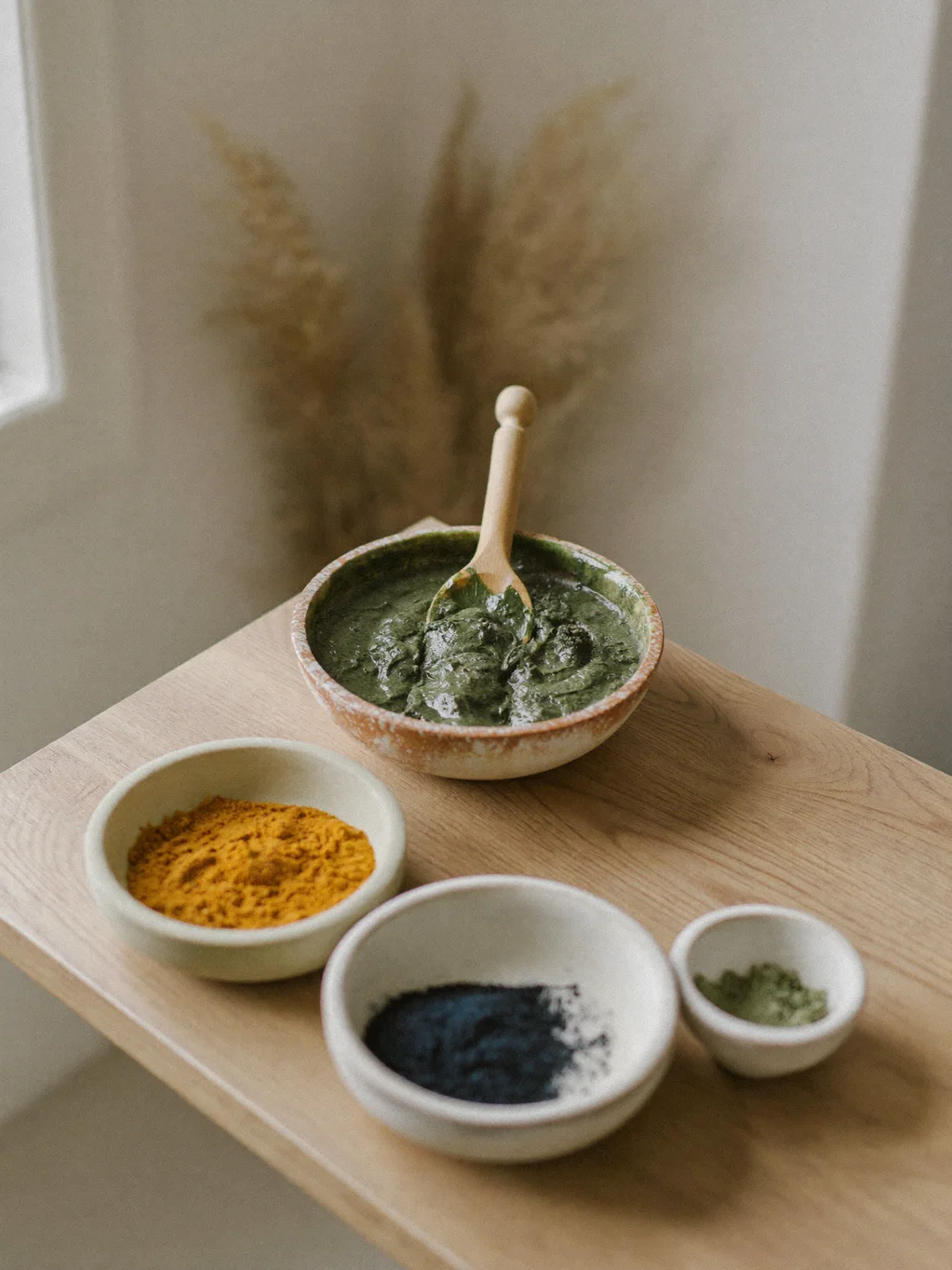
Hair muds give colour with tinctorial plants, with no ammonia or any of the other chemicals in dye, and they care for the scalp at the same time. If you are coming from dye, the first difference you will see is in your greys; the next ones, in what the visit is like and in how long the colour lasts. We explain it the way we would in the salon.
In short
What are hair muds?
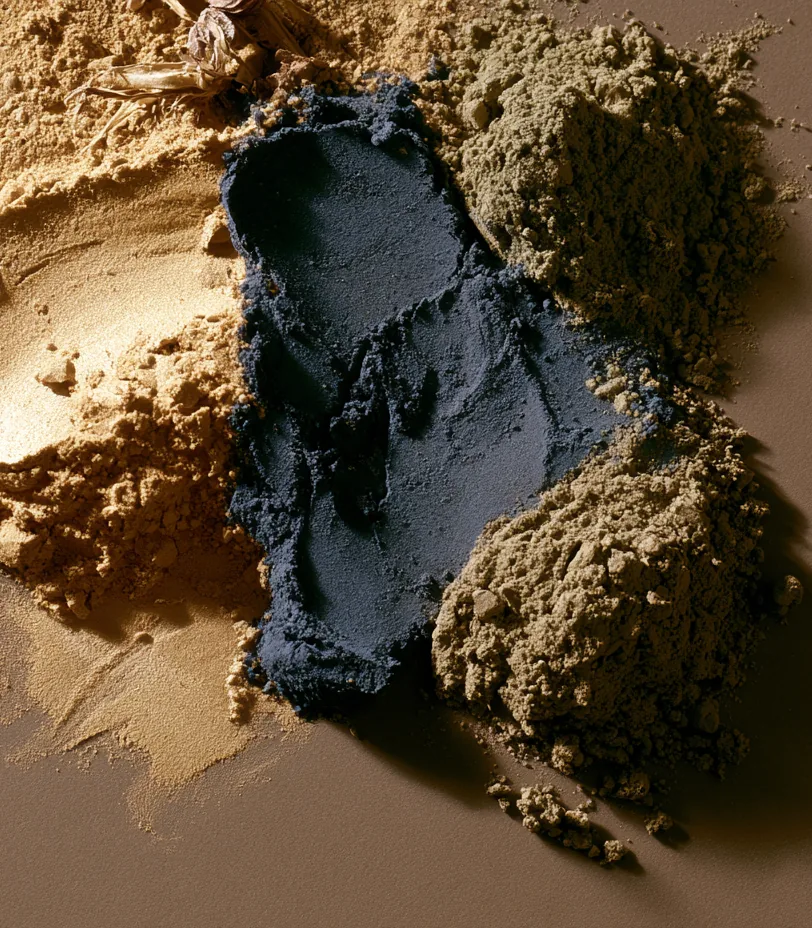
Hair muds, also known as plant-based hair dye or herbal hair colour, are ground tinctorial plants, such as henna (Lawsonia), Cassia, Indigo or walnut, mixed with clays, minerals and hot water and applied to clean hair. They colour the hair from the outside, with no ammonia or PPD, and care for the scalp at the same time. They do not cover greys: they varnish them and blend them into your colour.
What they are made of
The main plant is Lawsonia, which is henna as we have always known it, and it is in almost all our formulas. Alongside it we use Cassia, Indigo, walnut and amla, and we add clays and minerals to the blend. The plants come as a powder: mixed with hot water, they activate and release their colour.
No ammonia, no PPD, no resorcinol. PPD and resorcinol are chemical ingredients commonly found in oxidative dyes; in hair muds, the colour comes from the plant.
Natural hair muds have the colour of the ground plant, somewhere between green and ochre, and they give off no strong smells. If somewhere offers you muds that are almost black, ask what is in them: more often than not they contain the same chemistry as a conventional dye.
At the salon we do not work with fixed recipes: each plant varies with the season and each head of hair responds in its own way, so we formulate your blend at the diagnosis, after looking at your scalp and your hair. Which colour each plant gives, you will find further down.
Hair muds for grey hair: they do not cover it, they varnish it
It is the first thing we explain to anyone coming from dye who wants to use hair muds as a natural hair dye for grey hair. Chemical dye can cover a grey because it changes the colour inside the hair; hair muds cannot do that. The plant wraps around the hair from the outside and varnishes it: the grey is still there, but in a lighter, warmer tone than the rest, blended into your colour like a reflection of light. The effect is similar to very natural highlights.
At the salon we explain it with an amber glass vase. In front of a white wall, the glass looks light brown; in front of something dark, the same glass looks deeper. Hair muds do the same with your hair, because they add to the colour you already have: on a grey they leave a light, warm reflection, and on a dark base, a deeper brown, warm as well.
That is why, as the hair grows, you do not get the hard line that dye leaves: the new greys coming through contrast very little with the varnished ones, and the colour melts into the new hair like a gradient.
If what you want is greys that are completely covered and a uniform colour, hair muds will not give you that; at the diagnosis we look together at whether the result they do give suits you. This is how Vero's turned out.
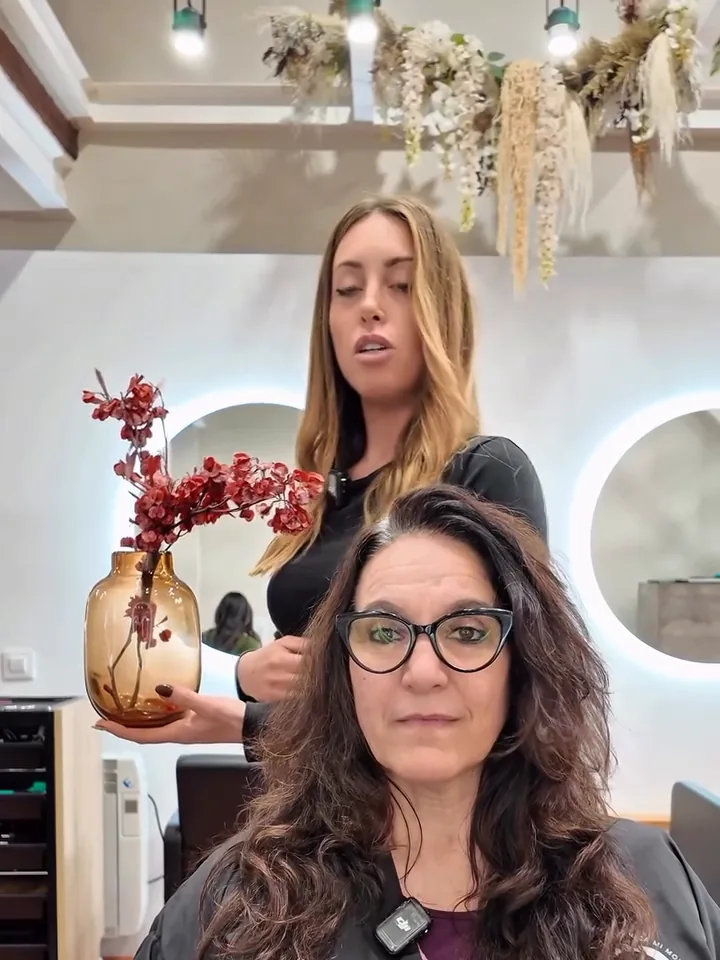
What varnished greys look like: Vero, before and after
Vero, a client of the salon, was coming from chemical colour and came in for her first hair muds. She had between 70 and 80% grey at the front and far less at the back, on a dark base. At the front, where there was the most grey, we went for a warm brown; at the back, with so little grey, her natural colour stayed practically as it was.
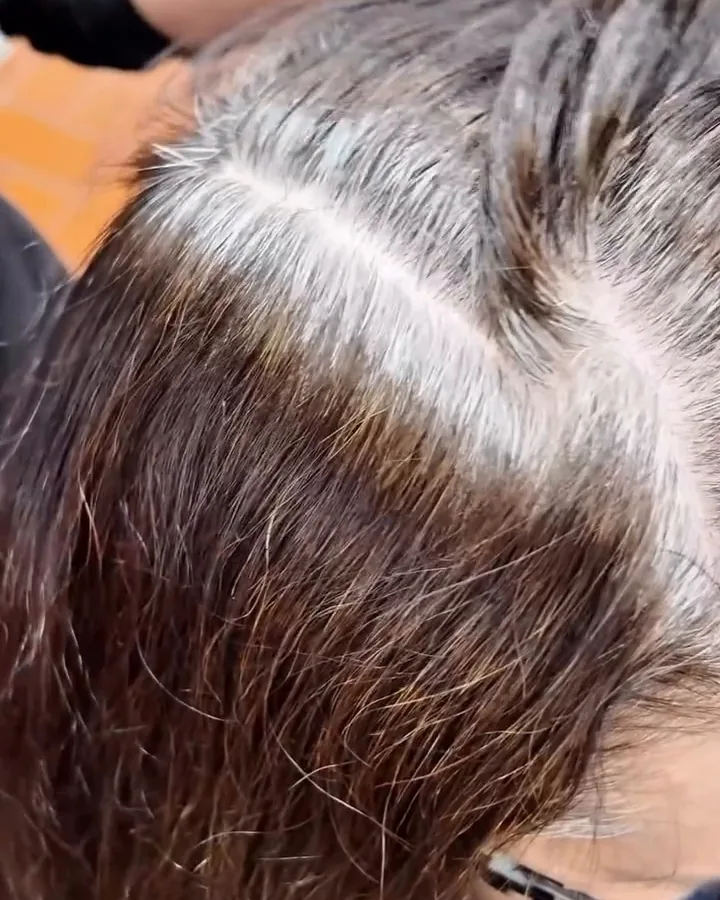
i.
Before
Her parting: the white greys mark the root against the dark base.
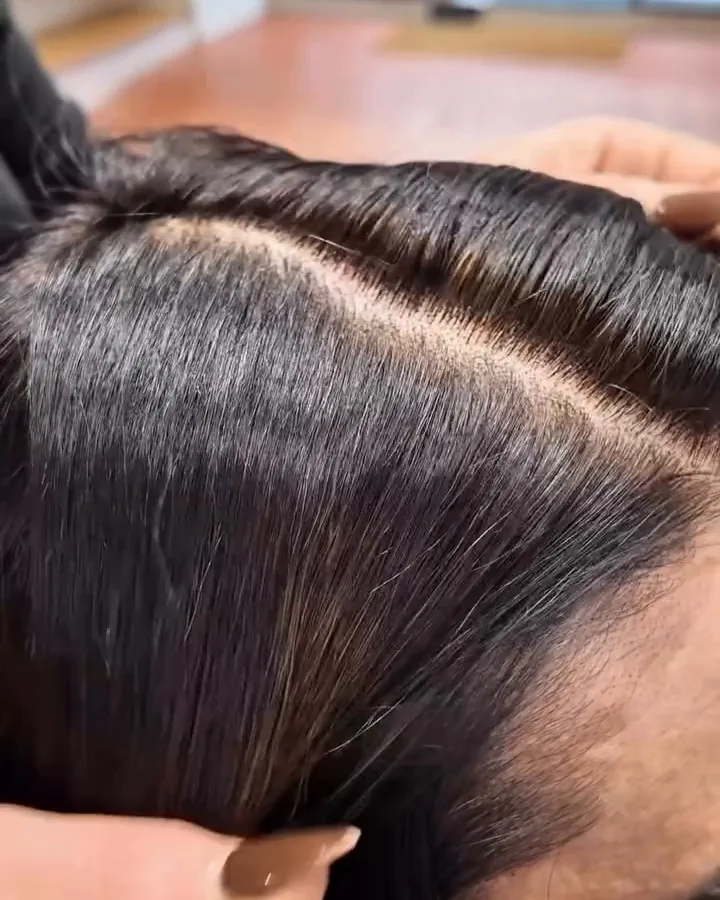
ii.
After
The same parting once finished. The greys are varnished in a warm brown: they are still there, but there is no longer a white line at the root.
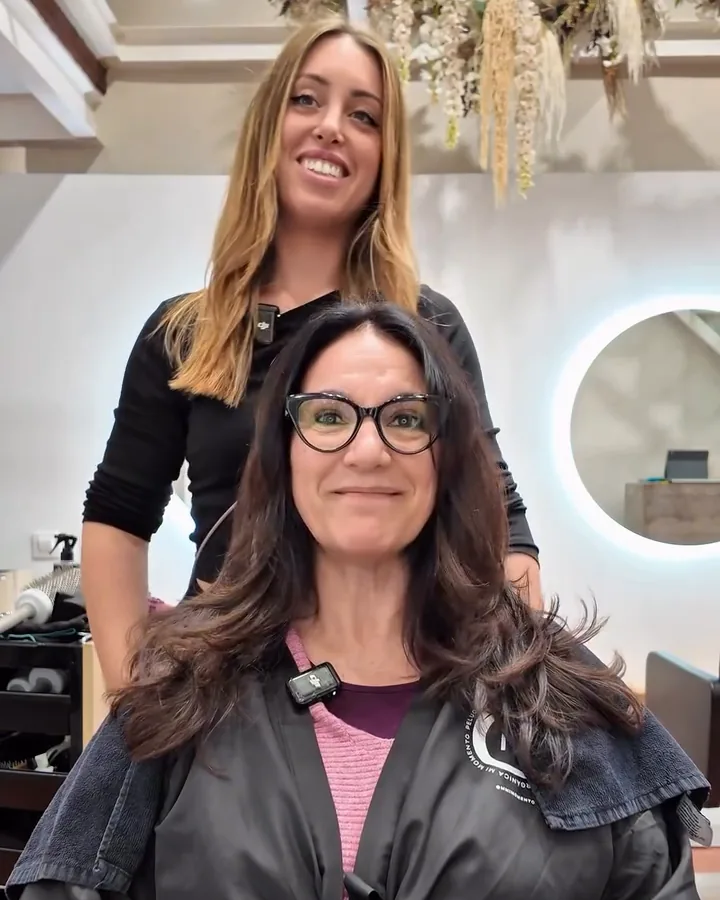
iii.
Vero, at the end
"I look great," she told us. We gave her a cut, a hydration treatment and her first application of hair muds, and we agreed to see her again in six weeks to decide whether to repeat the colour or change the plants.
Stills from the video of her session, which we published on our Instagram in March 2026. No retouching.
Hair muds versus conventional dye
Vero was coming from dye. If that is your case, this is what changes. Some people call them mud dye, but they do not work like a dye: both give colour, in very different ways; dye changes the hair from the inside and hair muds work on the outside. If you want to know the difference between henna and hair muds, or what sets them apart from other plant-based colours, we explain it in the plant-based hair dye guide.
| Where they differ | Hair muds | Conventional dye |
|---|---|---|
| How they give colour | From the outside: the plant wraps around the hair and varnishes it, with no oxidation. | By oxidation: it opens the hair's outer layer (the cuticle) to change the colour from the inside. |
| What is in them | Ground tinctorial plants, clays, minerals and hot water. No ammonia, PPD or resorcinol. | Oxidative colourants. Many contain ammonia, PPD or resorcinol. |
| Grey hair | They varnish it and blend it in: it looks like a reflection of light. | It covers it completely, in a uniform colour. |
| Lightening the shade | They cannot: they add to your base colour. | It can lighten it. |
| As it grows | No hard line: the colour melts into the new hair. | You can see the line between the colour and the new hair. |
| Over time | The colour softens gradually. | It tends to oxidise and go dull. |
| How they are applied | Warm, on freshly washed, still damp hair. | On dry, unwashed hair. |
| Beyond colour | They are also a treatment: more body, more shine and less frizz from the first time. | Its job is to give colour. |
We are comparing with the classic oxidative dye. There are muds on the market that do cover greys one hundred per cent, but they manage it because they contain chemicals. Ours do not.
If you currently have dye or highlights
Like Vero, there is no need to wait for the dye to grow out or to cut your hair to get started. Hair muds varnish the greys coming through and also dress the dyed lengths as they grow, so there is no line to hide.
The change is gradual: session by session, the hair sheds the remains of the dye and the muds gain ground. It is a process of months, but it looks good from day one. How long it takes depends on your greys and on the dye you come in with, and we will tell you at the diagnosis. We go into it in more detail in the guide to leaving dye behind and wearing your greys.
The same goes if you have highlights: you can have hair muds on blonde or highlighted hair, but they will not lighten it. That said, it is best done at the salon: highlighted hair is porous and, if the blend is not right, it absorbs tones you do not want.
With blondes we did a lot of testing before we found our blend. Marga, for example, used to have highlights and the front of her hair was full of greys. With hair muds, her blonde blended in with the highlights, with no trace of orange tones.
Want to try it on your hair?
What colours hair muds give
The colour of your blend comes from the plants. These are the main ones in our blends, with the colour and timing of each. Lawsonia, henna, also has its own guide.
| Plant | Colour it gives | Exposure time | What else it brings |
|---|---|---|---|
| Lawsonia (henna) | Reddish or coppery. | From 30 minutes to 1 hour, depending on the intensity. | Protein, hydration and less frizz. It is the base of almost every formula. |
| Cassia | Golden or beige, very subtle, nothing orange. | From 10 to 20 minutes on its own. | Volume, body and shine. Ideal for blending greys in with a highlights effect. |
| Indigo | Dark blue. Blended with other plants, it is essential for browns and chestnuts. | Variable: the darker the brown, the longer. | A thicker feel to the hair, volume and shine. |
| Walnut | Brown with no warm reflection: it darkens. | From 30 to 35 minutes for a light hazelnut brown; 50 to 60 for a dark brown. | Lots of shine. |
| Amla | None of its own: it keeps the colour of the blend. | The same as the rest of the blend. | Shine and a conditioning effect. |
Indicative times for our formulas; we set yours at the diagnosis. Temperature is part of the formula too: hair muds are applied warm, but at a measured temperature, and a blend with Indigo cannot go above 50 °C, because above that the plant spoils.
Besides the plants in the table, we work with shikakai, which gives a warm tone and can intensify browns, and with chamomile, which adds shine and soothes an irritated or sensitive scalp.
Before your first visit: allergies, pregnancy and sensitive scalps
There are a few things you should know, or tell us, before we start:
- If it is your first time using plants and your blend contains Indigo, we do an allergy test on your arm before applying it.
- If you are allergic to nuts, especially walnuts, let us know: walnut can cause a reaction.
- If you are pregnant, breastfeeding or have a sensitive scalp, you can have hair muds: they contain no ammonia, PPD or peroxides (the hydrogen peroxide in dye), which is why many women choose them at those stages. If you have any specific concern, tell us when you book and we will go through it with you.
Your first visit, step by step
The first time does not start with colour, but with a conversation. This is what the visit is like:
The diagnosis
We talk about what you have done to your hair so far and look at your hair and scalp with the micro-camera. We decide with you what you want to achieve, now and in the long run, and give you a closed quote, so there are no surprises.
Oxygenation, if needed
Often, with the micro-camera we see blocked follicles (the point each hair grows from) or hair loaded with silicone. In that case we start with a scalp oxygenation, which frees it from that build-up so the hair muds work better.
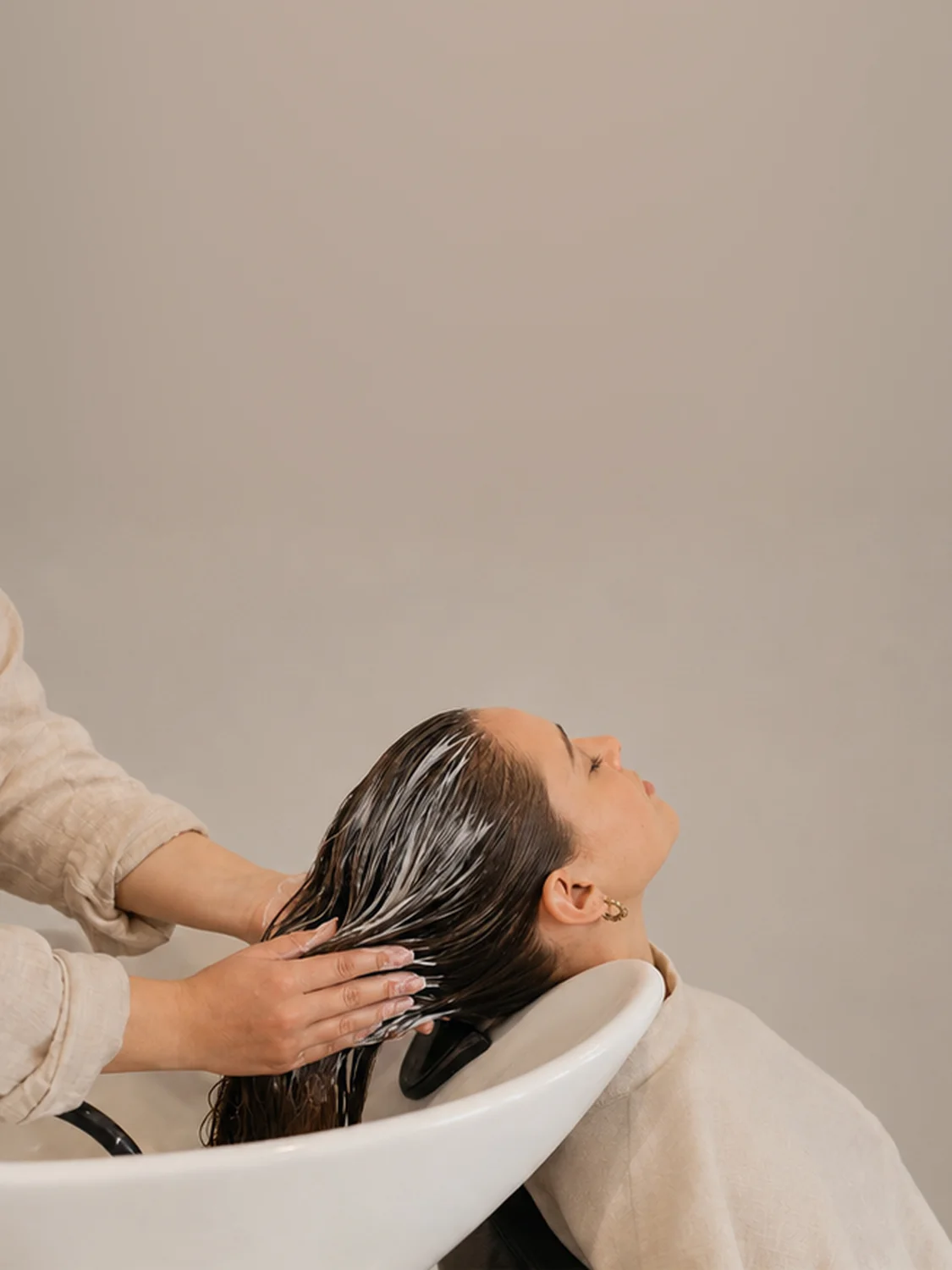
The wash
Unlike dye, hair muds are applied to freshly washed, still damp hair: the moisture helps the plant adhere well and release its colour evenly.
Your blend, freshly made
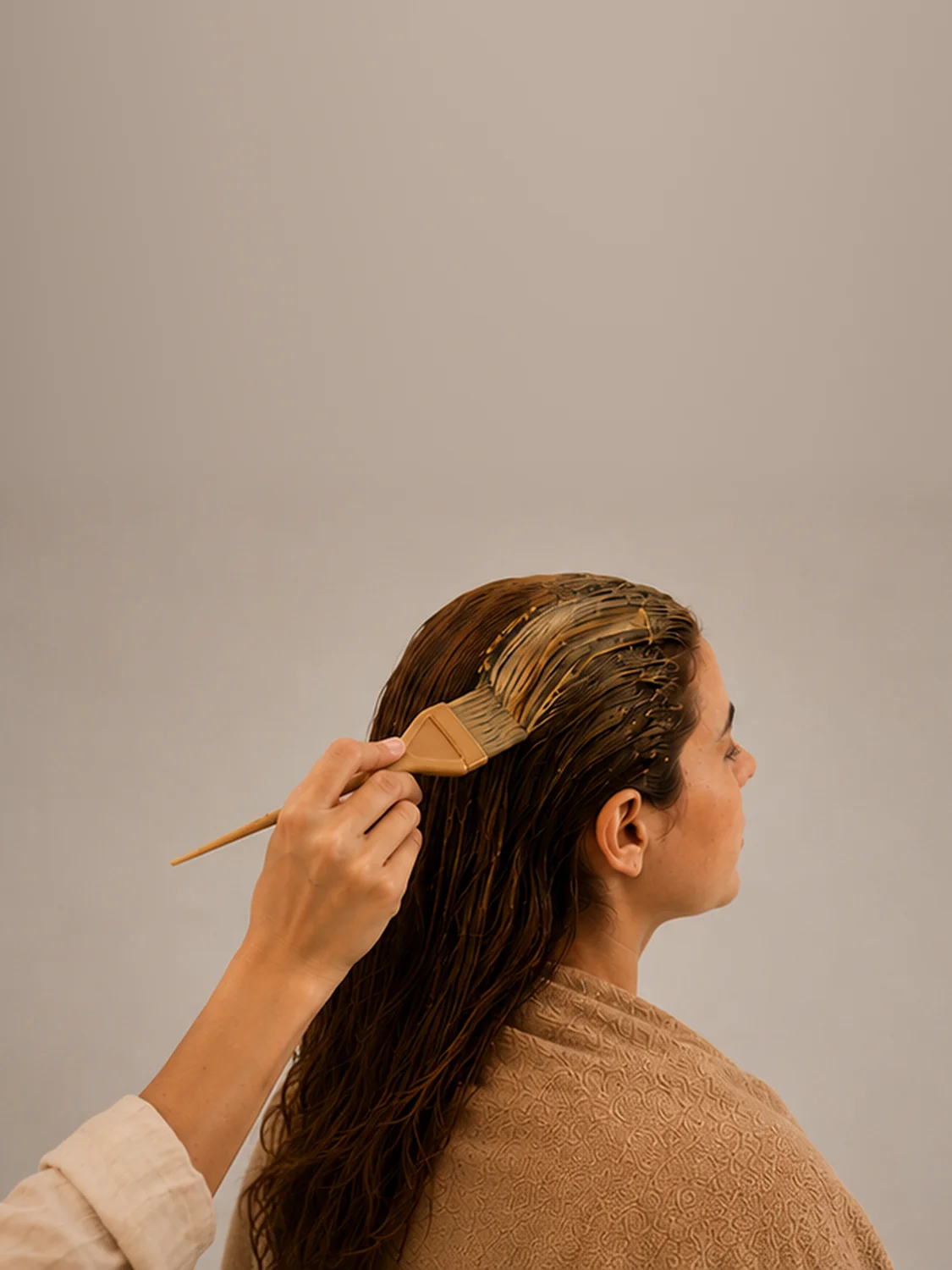
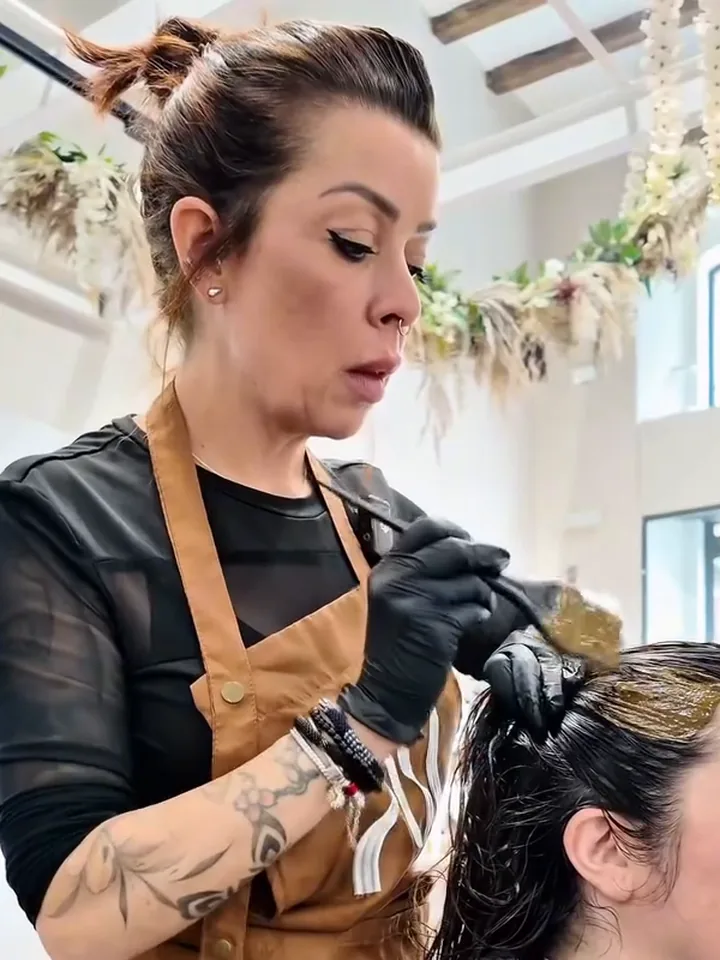
We prepare your hair muds on the spot, with hot water, and apply them warm. It is one of the nicest parts of the ritual.
The exposure time
It depends on the plants in your blend, and the timing for each one is in the table above: Cassia works for 10 to 20 minutes, and Lawsonia may need an hour if we are after an intense colour. In the meantime, you have a herbal tea and rest.
Rinse and final care
We remove the hair muds with water and, if your hair asks for it, finish with a hydrating treatment. That same day you will notice your hair has more body and more shine.
How much it costs and how long the visit takes
Hair muds cost from €120. The exact price depends on your hair and your blend, and we give it to you as a closed quote at the diagnosis, before we start. If you decide to go ahead, you can have your first hair muds that same day, unless the Indigo allergy test is needed first: the visit takes around 90 minutes. You will find all the details of the ritual on the hair muds service page.
What you will notice, and when
From the first session, you will notice stronger hair, with more body and less frizz: as well as giving colour, hair muds are a treatment that hydrates instead of drying out.
The scalp notices it too. From the first application, the plant starts to stabilise oiliness, flaking or sensitivity, and session by session the change becomes more noticeable. What you can expect in your case, we will tell you at the diagnosis.
How long hair muds last in the hair
It depends on the area. The new hair growing at the root does not have the muds yet, so the roots are touched up, usually every six weeks. We set the exact rhythm with you depending on your hair and how fast your greys grow.
On the rest of the hair, the colour softens little by little and you can revive it whenever you like.
That is what Ari did. She had had hair muds in a red tone and came back two months later: "I thought the colour would last less, but even though it has faded, I still have a nice colour," she told us. Because hair muds do not oxidise the hair, the colour does not end up in that oxidised, dull tone dye takes on over time: it just softens.

i.
Two months on
The red has softened, but it is still a nice colour.
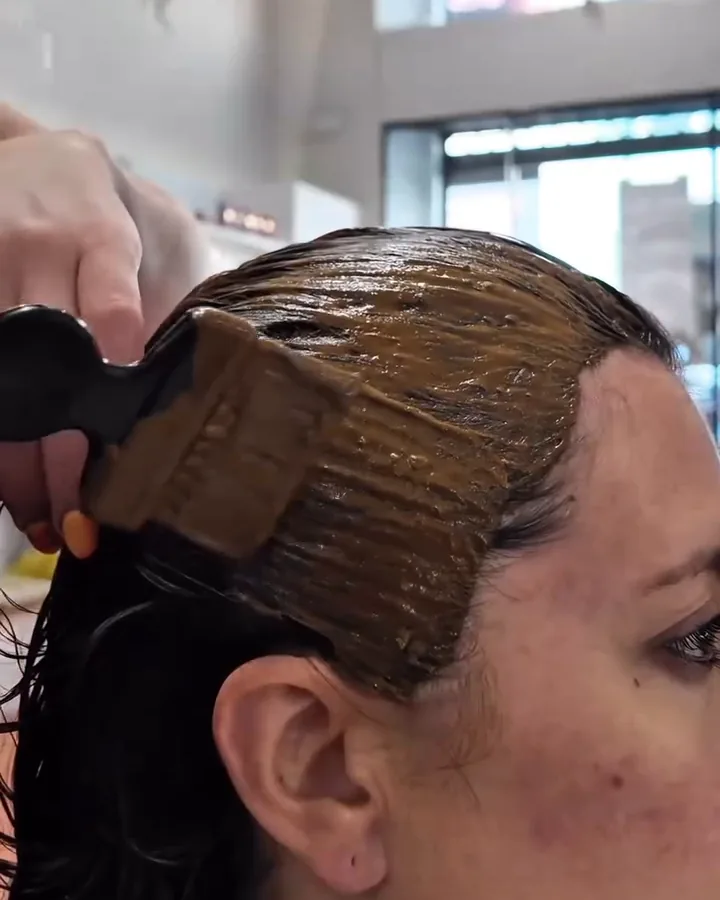
ii.
The application
We apply the hair muds all over the hair to revive the red.
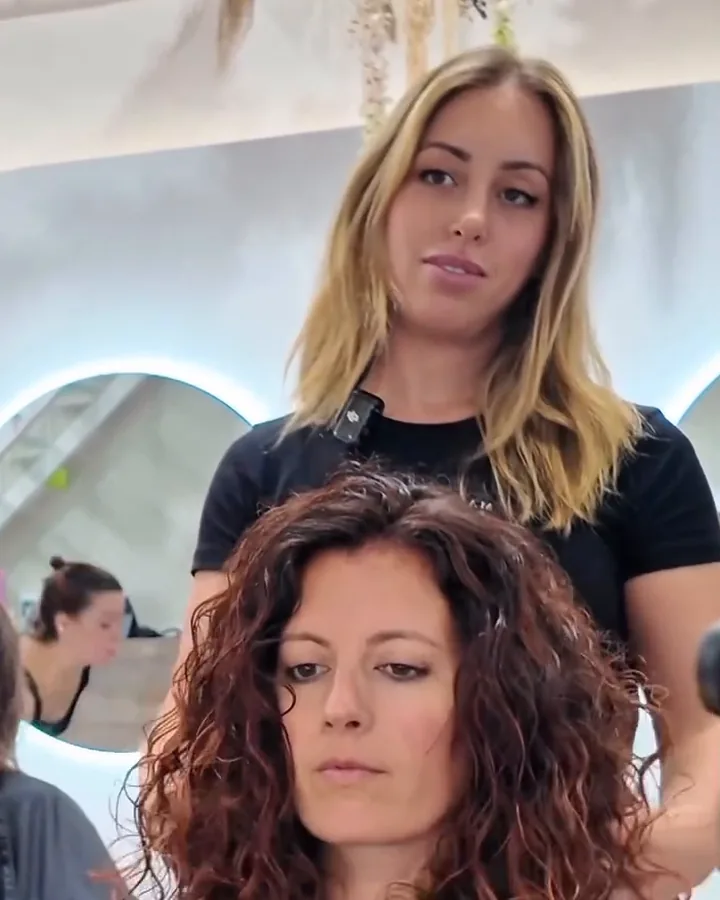
iii.
Revived
The intense red she left the salon with two months earlier is back, with more shine.
Stills from the video of her session, which we published on our Instagram in September 2025. No retouching.
We will be waiting for you in Gràcia
If you want to make the move to hair muds, we will be waiting for you at Mi Momento, our salon in Gràcia, Barcelona: Carrer de Verdi 49.
Key takeaways
- Hair muds are ground tinctorial plants, with clays and minerals, mixed with hot water. They contain no ammonia or PPD.
- They do not cover greys or lighten the hair: they varnish the greys and add to your colour, with no hard line as it grows.
- The first visit starts with a micro-camera diagnosis and a closed quote. Hair muds cost from €120.
- As well as colour, they are a treatment: more body and shine from the first session, and a more balanced scalp over time.
- The roots are usually touched up every six weeks. On the rest of the hair, the colour softens little by little, without the oxidised tone of dye.
- If your blend contains Indigo, we do an allergy test first. If you are allergic to nuts, let us know: walnut can cause a reaction.
Frequently asked questions
How long does the colour from hair muds last?
The roots are usually touched up every six weeks, because the new hair grows in without the muds. On the rest of the hair the colour softens little by little, without the oxidised tone of dye. One of our clients, Ari, came back after two months to revive her red and still had a nice colour.
Do hair muds lighten the hair?
No. Hair muds add to your base colour, so they cannot lighten it. That is why the same blend looks lighter on a grey and deeper on a dark base.
What colours do hair muds give?
It depends on the plants in the blend. Lawsonia (henna) gives reddish and coppery tones; Cassia, very soft golds; Indigo, combined with other plants, browns and chestnuts; and walnut darkens towards a brown with no warm reflection. A blonde is only possible on hair that is already blonde or highlighted, because hair muds do not lighten.
Can I have hair muds if I have dye or highlights?
Yes, and there is no need to wait for the dyed hair to grow out. The change is gradual: at the diagnosis we look at what your hair has on it and formulate from there. With blonde highlights we use our own blends so the blonde blends in, with no orange tones.
How do I know if hair muds are truly natural?
By their colour and smell. One hundred per cent natural hair muds have the colour of the ground plant, somewhere between green and ochre, and give off no strong smells. If they are almost black, or promise to cover greys one hundred per cent, they most likely contain chemicals, like a conventional dye.
How much do hair muds cost?
From €120. The price depends on your hair and your blend, and we give it to you as a closed quote at the diagnosis, before we start, so there are no surprises.
Do I need an allergy test before hair muds?
If it is your first time using plants and your blend contains Indigo, yes: we do a test on your arm before applying it, because it is one of the plants that can cause a reaction. And if you are allergic to nuts, let us know beforehand: walnut can cause a reaction.